



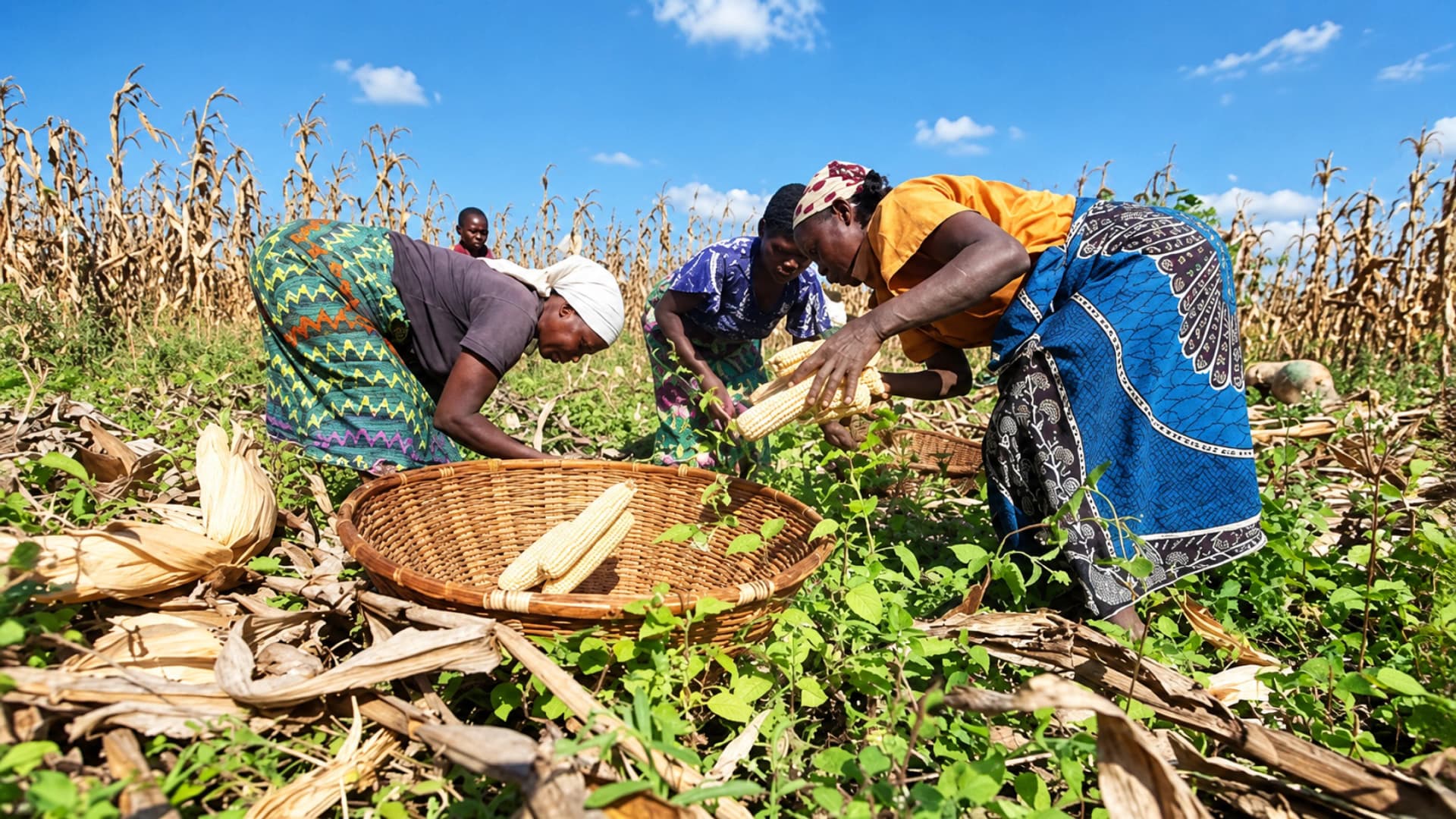
Africa has spent three decades debating genetically modified crops, yet the biggest questions extend well beyond food safety. The experience of Zambia, South Africa, Nigeria and Burkina Faso shows that the success of an agricultural technology depends on much more than the trait inside a seed.
South Africa became the continent’s first major adopter of GM crops. Burkina Faso later abandoned Bt cotton after problems with fibre quality created major losses for the cotton industry, even though many farmers valued the technology. Nigeria has approved GM cowpea and drought-tolerant, insect-resistant maize, while the gap between regulatory approval and widespread adoption remains significant.
At the same time, foundations, international research organisations, African institutions and multinational companies have invested heavily in seed systems, biotechnology and regulatory capacity.
The central issue is therefore one of agricultural decision-making. Who funds research? Who sets priorities? Who owns technologies? Who regulates them? Who bears the economic risk? And how much value ultimately reaches farmers?
The maize Zambia refused
About two decades ago, southern Africa was facing a severe food crisis. Two poor rainy seasons had produced successive failed harvests. In Zambia, about 2.9 million people were estimated to need food assistance.
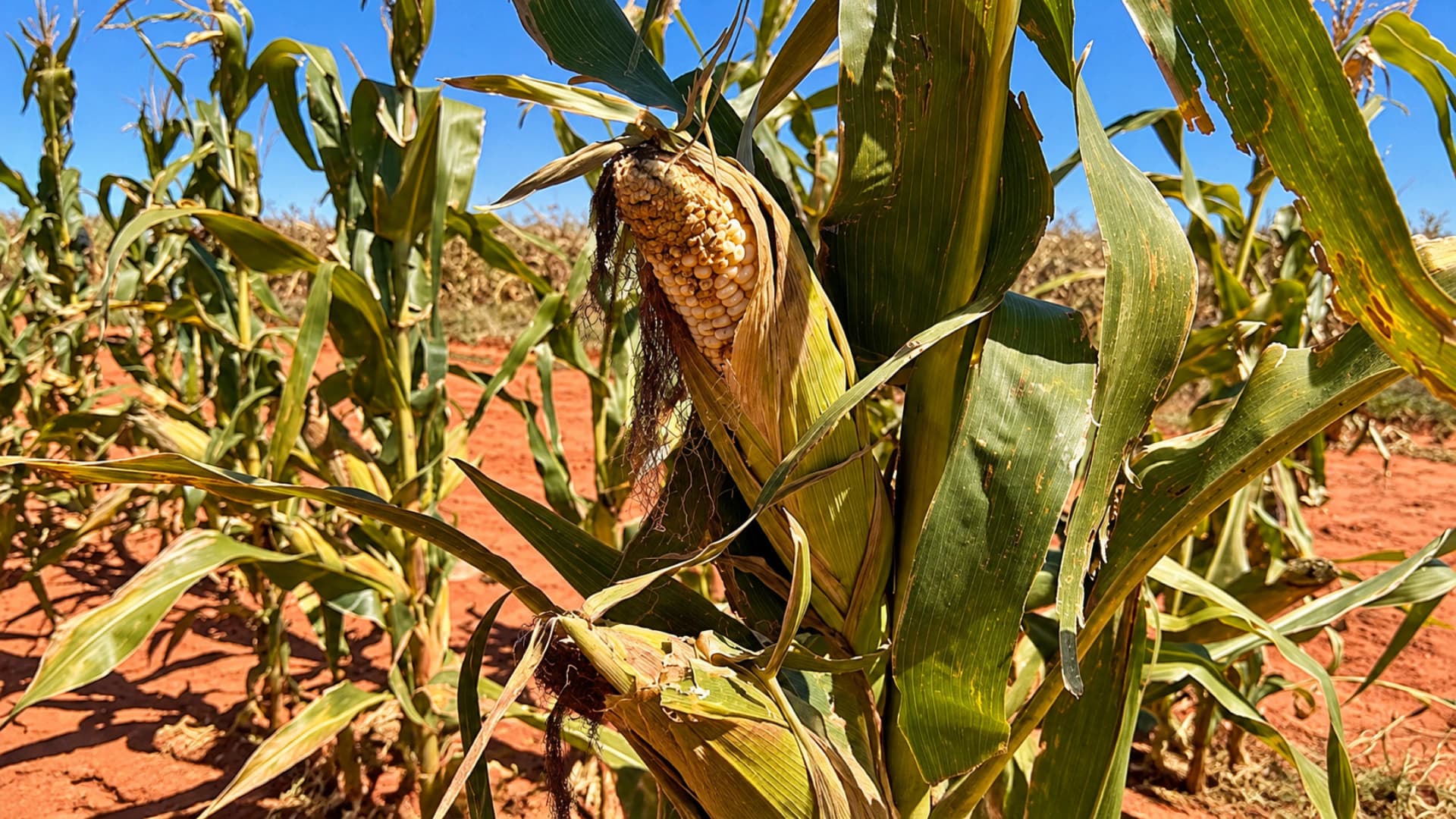
Maize farm
The United States offered maize. Thousands of tonnes had already arrived in Zambia.
President Levy Mwanawasa’s government refused the shipment because it was believed to contain genetically modified grain. Zambia did not have the laboratory and regulatory capacity needed to independently establish what was in the maize. The government sent scientists and experts to South Africa, Europe and the United States. In October 2002, it maintained the refusal, including for milled maize, citing the precautionary principle.
The controversy became a defining moment in Africa’s GMO debate.
There was also a commercial concern. Zambia’s Vice President Enoch Kavindele reportedly told UN personnel that the country had been warned about possible consequences for access to European markets if it began cultivating genetically modified crops.
The decision therefore involved several competing concerns: food safety, scientific uncertainty, trade and national agricultural interests.
The human pressure was immediate. In one reported incident, hungry villagers broke into a warehouse and took thousands of bags of the maize their government had rejected.
Two decades later, Zambia had built a much stronger biosafety system, including legislation, a national authority and laboratory capacity. The country still had no commercial GM crop cultivation, although its regulatory position allowed GMOs to be considered where they met legal safety requirements.
That evolution captures an important part of the African GMO story. Countries need the capacity to assess agricultural technologies for themselves.
What does “GMO” actually tell us?
Genetic modification describes a method. It does not describe a single crop or a single outcome.
Bt crops provide one example. Bacillus thuringiensis is a soil bacterium that produces proteins toxic to certain insect larvae. A Bt plant has been engineered to produce such a protein itself.
The resulting crops can have very different purposes. A Bt cowpea designed to resist an insect pest has a different agricultural objective from drought-tolerant maize or herbicide-tolerant soybean.
That distinction matters when assessing evidence.
A technology needs to be judged according to the particular crop, trait, environment and farming system involved. The word GMO alone cannot provide that assessment.
South Africa leads the way
While Zambia was refusing GM food aid, South Africa had already been developing its biotechnology system.
The country established an advisory committee on genetic engineering in 1979 and hosted an early transgenic field trial in 1989. Bt cotton was approved in 1997, followed by Bt maize in 1998. South Africa’s GMO Act came into force in 1999.
South Africa went on to become the continent’s largest and longest-running GM crop producer. USDA data puts GM crops at roughly 2.7 million hectares, with GM varieties accounting for around 90 percent of maize and all cotton production.
The country’s experience has produced mixed lessons.
Research on smallholder Bt cotton in the Makhathini Flats found early gains including higher yields and lower pesticide expenditure. Many farmers later stopped growing cotton. The reasons involved credit, markets and rainfall alongside the performance of the seed itself.
South Africa has also experienced the biological limits of pest-resistant crops. Stem borer resistance to Bt maize has been documented, demonstrating why resistance management and monitoring remain important.
The rise of agricultural philanthropy
A new phase began in the 2000s.
In 2004, Kofi Annan called for a new African agricultural revolution. In 2006, the Rockefeller Foundation and the Bill & Melinda Gates Foundation created the Alliance for a Green Revolution in Africa, or AGRA.
AGRA is sometimes described as a GMO organisation. Its early seed programmes were primarily focused on conventional and hybrid seed systems, including plant breeding, seed companies, agro-dealer networks and agricultural policy.
Its first major programme began in 2007 with $150 million over five years, comprising $100 million from Gates and $50 million from Rockefeller, across 13 countries. Later funding took the programme beyond $280 million.
This matters because seed infrastructure can influence agricultural technology regardless of whether a particular variety is genetically modified.
The African Agricultural Technology Foundation, established in Nairobi in 2003, took a more direct role in biotechnology. AATF negotiates access to technologies developed by corporations and research institutions and transfers them to African breeding programmes, often under royalty-free arrangements.
The Gates Foundation provided major grants to AATF, including approximately $35.9 million in 2008 for drought-tolerant maize and $50.5 million in 2012 for drought-tolerant, insect-resistant maize. Additional grants supported biotechnology knowledge-sharing and awareness. A 2018 grant concerned the approval and commercialisation of transgenic maize in several African countries.
These grants should not be combined into a single figure labelled “Gates GMO funding.” They covered different activities and technologies.
Together, however, they illustrate the scale of private philanthropic investment in African agricultural research and technology systems.
Nigeria puts the model to the test
Nigeria provides two important examples: Bt cowpea and TELA maize.
Cowpea is a major source of protein across sub-Saharan Africa. It is vulnerable to the Maruca pod borer, which can cause substantial crop losses.
The development of Bt cowpea involved international funding and research institutions, Monsanto’s donation of the Bt gene, coordination by AATF and breeding work by Nigeria’s Institute for Agricultural Research in Zaria. Nigeria approved the crop in 2019 and registered SAMPEA 20-T later that year. It became the first country to commercialise genetically modified cowpea.
The next challenge was adoption.
The project had targeted production of 1,000 tonnes of seed. A later US agricultural report put actual production at roughly 300 tonnes.
The lesson is straightforward. Regulatory approval does not guarantee that farmers will adopt a crop at scale.
Nigeria’s experience with TELA maize followed a similar path.
The Water Efficient Maize for Africa project began in 2008, bringing together AATF, Gates, USAID, the Howard G. Buffett Foundation, Monsanto and agricultural research organisations. It combined conventional breeding with biotechnology. TELA later incorporated drought tolerance and insect protection.
Nigeria authorised open cultivation in 2021 and registered four TELA hybrids in January 2024. Seed reached the Nigerian market that year.
The technology has attracted both support and opposition. AATF presents TELA as a tool for reducing drought and insect-related losses. Civil society organisations and other critics have questioned the technology, its regulation and the wider agricultural model surrounding it. The debate reflects a broader concern over who determines the direction of Nigerian agriculture.
Burkina Faso’s cautionary experience
Burkina Faso offers perhaps the clearest example of why crop performance has to be judged across the entire agricultural value chain.
The country introduced Bt cotton commercially in 2008. The technology provided insect protection and reduced the need for pesticide spraying. Many farmers were satisfied with the results.
The problem emerged in fibre quality.
The Bt varieties were associated with shorter fibres and lower-quality lint. Cotton companies suffered financial losses because the quality of the final product had declined. Burkina Faso began phasing out Bt cotton in 2016.
The distribution of those costs was unusual. Farmers were largely paid according to the quantity they produced, while cotton companies faced the consequences of lower-quality fibre.
The case became an important warning about agricultural innovation. A trait can solve one problem while creating another elsewhere in the production chain.
It also illustrates why economic outcomes cannot be inferred from yield figures alone.
Who sets Africa’s agricultural agenda?
The expanding role of foundations and international organisations raises a difficult institutional question.
Africa has enormous agricultural needs. Yield gaps, drought, pests and limited access to inputs are genuine problems. Agricultural research has also faced decades of inadequate funding.
Philanthropic capital can therefore fill important gaps. It can support research into crops that have limited commercial value to multinational companies. It can help build laboratories, seed systems and regulatory expertise.
Yet funding also shapes priorities.
When a major foundation finances particular research programmes, institutions and technologies, those areas receive resources that other approaches may not receive. That does not establish direct control over African governments or regulators. It does create influence.
Critics of organisations such as AGRA argue that donor-funded agricultural programmes can encourage commercial seed markets and reduce attention to farmer-led seed systems and agricultural sovereignty. Evaluations and advocacy organisations have disputed some of AGRA’s claims about agricultural yields and incomes.
There is also a historical reason for public suspicion. Colonial cash-crop systems, structural adjustment programmes and corporate involvement in African agriculture have left a deep legacy.
That history deserves to be part of the discussion.
At the same time, unsupported claims about GM crops causing infertility, cancer or population reduction should not be treated as evidence. Those claims are different from the legitimate scientific and economic questions discussed here.
The questions that remain
Thirty years of experience have produced a more complicated picture than either side of the GMO debate often suggests.
The key questions now concern ownership, regulation, adoption and distribution of benefits.
How much value remains with farmers?
How much is captured by seed companies and technology owners?
How much investment goes toward biotechnology compared with irrigation, storage, roads, soil management and conventional breeding?
How strong is long-term monitoring after a crop is released?
And how independent are regulatory systems when some of the organisations supporting regulatory capacity are also involved in financing agricultural technologies?
These questions do not have one continental answer.
South Africa, Nigeria, Zambia and Burkina Faso have followed different paths. A technology that performs well under one set of conditions may produce a different result elsewhere.
The history of GM agriculture in Africa therefore points toward a more practical way of thinking about the debate. Governments need strong scientific institutions, transparent regulation, independent monitoring and enough information to evaluate technologies according to their actual performance.
The question facing Africa is ultimately larger than whether a seed has been genetically modified.
It concerns who develops it, who funds it, who regulates it, who owns it, who sells it, who plants it and who benefits from the harvest.
That is the debate that will shape Africa’s food future.







Comments
No comments yet. Be the first to share your thoughts.