



The War the World Chose to Forget: Tragedy of Biafra and the Silence That Still Haunts Nigeria
Be the first to rate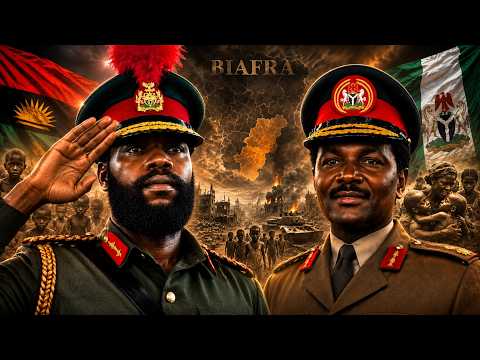
Published 24 Jun 2026 • 389 views
How global powers traded millions of lives for oil, and the lasting wounds of Africa's first modern blockade.
This is the story of a secession that cost over one million lives, a blockade that starved a generation, and a wound that was never allowed to heal. From the colonial merger of 1914 to the pogroms of 1966, from the Aburi Accord to the Asaba Massacre - we trace the path to war and its enduring aftermath.
The African Mail presents a data-backed editorial investigation into the Nigerian Civil War - one of Africa's most devastating conflicts. We examine the foreign powers that fuelled the fire, the policies that erased a middle class, and the questions that remain unanswered more than five decades later.
- 0:00Intro - The Name That Came From the Sea
- 3:00How Nigeria Came to Break - 1914 to 1966
- 7:00The Pogroms - 8,000 to 30,000 Dead
- 10:00The Aburi Accord - The Last Chance for Peace
- 13:00The Proclamation - May 30, 1967
- 16:00The Asaba Massacre - October 1967
- 20:00Foreign Hands - Britain, France, and the Cold War
- 24:00The Blockade - The War Fought With Hunger
- 28:00The Surrender - "No Victor, No Vanquished"
- 31:00Twenty Pounds and Abandoned Property - The Erasure
- 35:00The Silence - What Was Never Taught
- 39:00The Questions That Remain - Whose Country Is This?
- 43:00Subscribe to The African Mail
Subscribe To Our Channel for Weekly Global Analysis Through an African Editorial Lens.
Follow The African Mail: Instagram, Twitter/X, TikTok @TheAfricanMail
Content Summary
We go beyond the headlines to examine the Nigerian Civil War in its full historical context - from the colonial merger of 1914 that created Nigeria as a "mere geographical expression," to the January 1966 coup, the subsequent pogroms against Igbo civilians in the north, and the breakdown of the Aburi Accord.
We investigate the Asaba Massacre of October 1967 - the single worst atrocity of the war - in which federal troops executed over 1,000 unarmed men and boys. We explore the foreign interests that prolonged the conflict: Britain's determination to protect its oil holdings, France's secret arming of Biafra, and the Soviet Union's alignment with Nigeria.
We examine the blockade that caused mass starvation - with as many as 1,000 children dying in a single day - and the humanitarian airlift that followed. We conclude with the postwar policies that erased Igbo economic life: the twenty-pound exchange limit and the abandoned property laws, and the silence in Nigeria's national curriculum that has allowed the wound to fester for generations.
Audience Rating
No ratings yet.
Tap a star to rate.
Topics
24In This Story


More To Watch
More
Giannis Antetokounmpo: From Stateless Child in Greece to NBA Champion
Aliko Dangote: Africa's Industrial Sovereign Who Built a $20 Billion Empire

M-Pesa: the African Mobile Money Innovation That Changed Global Finance
Beyond the Assegai: the Real Reason the Zulu Army Was Feared Across Africa
Most Viewed
- SportsMost Impossible Journey in Sports History: Sand to Gold Story of Francis Ngannou
- ProfilesRewriting the Rules of African Development Finance: the Bold Vision of Akinwumi Adesina
- BusinessLagos Built a Clearing House. West Africa Is Still Waiting to Use It
- Politics & GeopoliticsA Port, a Corridor, and Four Landlocked States