


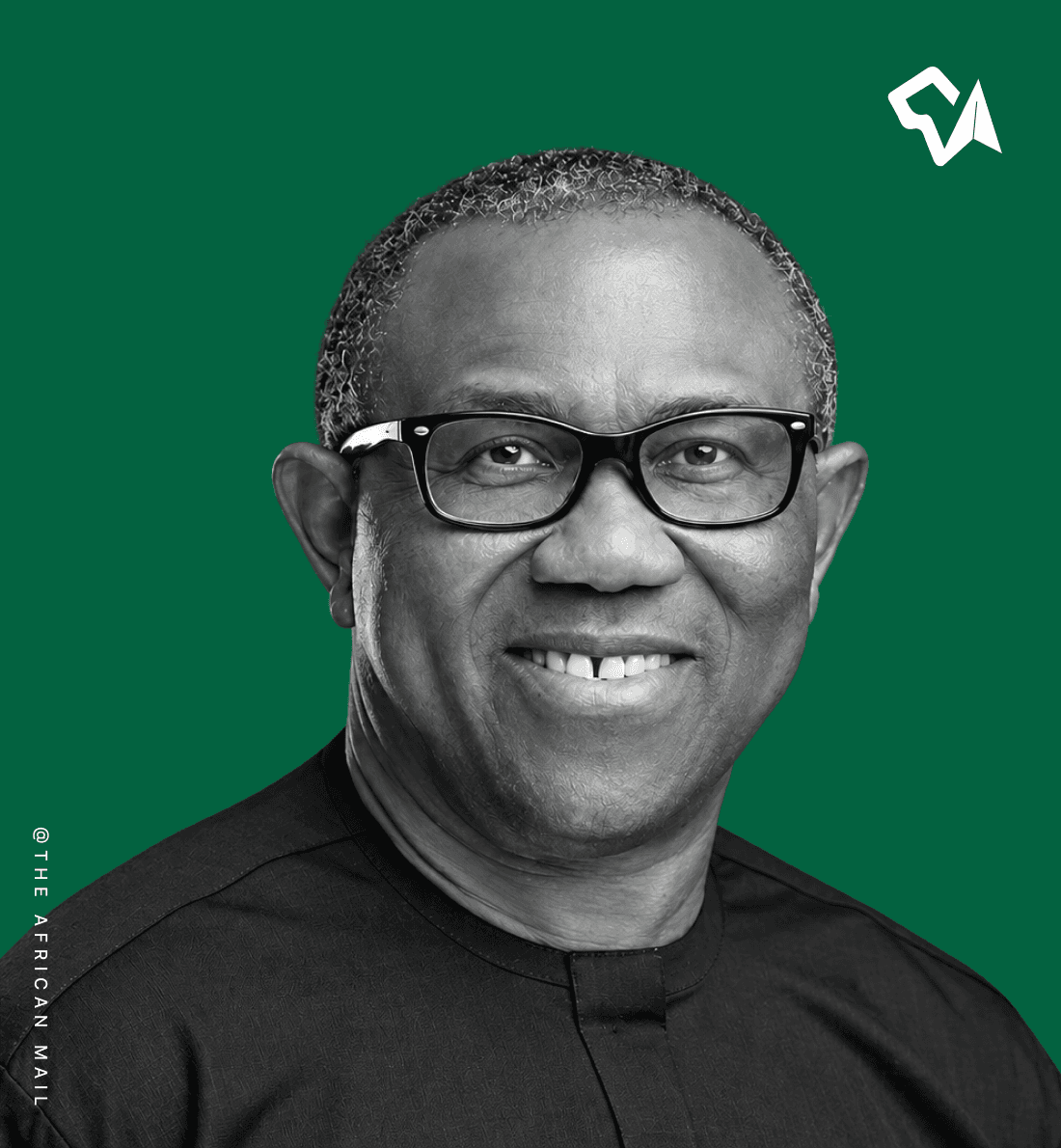
The 2023 Nigerian presidential election marked a watershed moment in the nation's political history, ignited by an unprecedented wave of youth-led civic engagement. At the center of this electoral disruption was Peter Obi, whose candidacy galvanized millions of voters seeking an alternative to the long-standing political establishment. Driven by an organic, digitally savvy coalition known as the "Obidient" movement, his campaign transformed from a third-party challenge into a formidable national political force that fundamentally reshaped Nigeria's democratic landscape.
The Origin of a Trader-Philosopher
Peter Onwubuasi Gregory Obi was born on July 19, 1961, in Onitsha, Anambra State, a city renowned across West Africa for its sprawling commercial markets and fierce entrepreneurial spirit. This commercial environment ingrained a fundamental trader’s pragmatism in him from an early age. However, his academic trajectory diverged from pure commerce. After attending Christ the King College in Onitsha, he proceeded to the University of Nigeria, Nsukka (UNN), where he graduated with a degree in Philosophy in 1984.
This philosophical grounding which emphasizes logic, ethics, and critical inquiry would later manifest in his analytical approach to governance. Before entering the political arena, Obi built an extensive career in corporate Nigeria. He served as the chairman of Fidelity Bank Plc, held the chairmanship at Guardian Express Mortgage Bank, and directed operations at Next International, establishing his standing as a major corporate executive. His transition from the boardroom to public office was defined not by populist rhetoric, but by a technocrat's calculated approach to institutional management: treating state governance as an exercise in optimal resource allocation.
The Crucible of the Courts and Constitutional Precedent
The defining breakthrough of Obi’s public career was a multi-year legal battle that tested Nigeria's democratic institutions. In 2003, Obi contested the Anambra State governorship election under the platform of the All Progressives Grand Alliance (APGA). When the Independent National Electoral Commission (INEC) declared Dr. Chris Ngige of the People's Democratic Party (PDP) the winner, Obi mounted an exhaustive legal challenge through election petition tribunals.
In March 2006, after three years of litigation, the appellate court restored his mandate, and he was officially sworn into office. However, his administration was interrupted months later by an impeachment engineered by the state legislature. Obi successfully challenged the legality of the impeachment in court and was reinstated in February 2007.
His most profound judicial milestone came following the April 2007 general elections, where INEC conducted fresh gubernatorial polls and declared Andy Uba the winner. Obi challenged the process at the apex court. On June 14, 2007, the Supreme Court delivered a unanimous ruling in Peter Obi v. INEC, establishing that a governor's constitutional four-year tenure legally begins on the date of swearing-in, not when elections occur.
This landmark judgment unseated Uba, restored Obi to complete his term, and permanently altered Nigeria’s constitutional framework by establishing legal precedent for off-cycle gubernatorial elections in states such as Anambra, Edo, Ondo, and Osun.
The Work: ANIDS and the Educational Rebirth
Upon securing his mandate, Obi instituted a planning framework designated as the Anambra Integrated Development Strategy (ANIDS). Formulated to address multiple sectors concurrently, ANIDS domesticated the United Nations Millennium Development Goals (MDGs) into local budget planning, prioritizing rural infrastructure, healthcare centers, and educational revitalization.
The most visible shift occurred in basic education. Seeking to reform underperforming public institutions, his administration transferred administrative custody of 1,040 public primary and secondary schools back to missionary bodies (principally Catholic and Anglican dioceses). To support this structural handover, the state disbursed N6 billion in direct capital rehabilitation grants directly to school managers.
Anambra State Education Reform Profile
Metric / Sector | Pre-Reform Context | Post-Reform Implementation |
|---|---|---|
School Governance | Fully centralized state control | 1,040 schools restored to mission management |
Rehabilitation Capital | Centralized bureaucratic allocation | N6 billion direct infrastructure grants |
National Exam Performance | Lower national percentile standings | Ranked top tier in WAEC/NECO pass rates |
Basic Literacy Outreach | Constrained rural school infrastructure | Statewide MDG-aligned education access |
By pairing educational decentralization with poverty mapping and road construction, independent development partners and international reporting reflected measurable gains in Anambra's human development index over the course of his two terms.
The Economics of Prudence: Savings, Investments, and Disputes
Obi’s economic profile centers heavily around fiscal discipline. At the conclusion of his second term in March 2014, his administration publicized that it had left approximately N75 billion in liquid cash, foreign currency reserves ($150 million), and ecological funds for the incoming administration of Willie Obiano. His government also directed a N1.95 billion state equity investment into Intafact Beverages Limited (SABMiller), intended to expand local corporate tax generation.
These financial claims, however, remain fiercely debated in public discourse. Successive figures, including Governor Charles Soludo, have scrutinized the balance sheet, contending that inflation, currency devaluation, and legacy contractual liabilities substantially diminished the real purchasing power of the leftover assets.
Additionally, critics have highlighted a notable governance gap: for nearly seven years of his eight-year tenure, local government councils were run through appointed caretaker committees rather than democratically elected officials, until elections were eventually held in January 2014 near the end of his administration.
The Pandora Papers Disclosure
In October 2021, reporting by Premium Times and the International Consortium of Investigative Journalists (ICIJ) on the Pandora Papers leak revealed that Obi held undeclared offshore shell companies and trusts, notably Next International (UK) Limited in the British Virgin Islands.
The leak drew public scrutiny from transparency organizations regarding asset declaration mandates under Nigeria's Code of Conduct Bureau. In response, Obi maintained that he committed no legal violations, stating that the foreign entities represented legitimate international investment vehicles for family wealth management established prior to his assumption of public office.
The 2023 Disruption: The Obidient Movement and Electoral Shifts
After leaving office, Obi maintained high public visibility through academic lectures, popularizing slogans such as "Go and verify" and advocating a structural transition from "consumption to production." In 2022, after defecting from the PDP, he secured the presidential ticket of the Labour Party.
His campaign mobilized a broad coalition of urban and tech-enabled youth who coordinated voter registration and ground rallies under the "Obidient" label. Outlining his vision at the Chatham House in London in January 2023, Obi focused on institutional transparency, agricultural productivity, and the eradication of systemic crude oil theft.
2023 Presidential Election Peter Obi Performance
Category | Certified Electoral Outcome |
|---|---|
Total National Vote | 6,101,533 votes (25.4% of total votes cast) |
State Pluralities | Secured 11 states across diverse geopolitical zones |
Federal Capital Territory (FCT) | Won outright plurality in Abuja |
Strategic Strongholds | Won Lagos State, altering traditional regional dominance |
Although the electoral umpire returned Bola Ahmed Tinubu of the All Progressives Congress as winner a verdict affirmed by the Supreme Court following legal challenges the outcome established the most prominent third-party performance in Nigeria's Fourth Republic.
Post-Election Civic Engagement and Philanthropy
Following the 2023 general election, Obi redirected focus toward direct institutional philanthropy, with tracked disbursements exceeding hundreds of millions of naira toward health education. Notable interventions include N15 million to the St. Philomena College of Nursing in Edo State, N15 million to the Emekuku Nursing School, and N10 million to the Oyo State College of Nursing Sciences in Ibadan, targeted at addressing healthcare training deficits.
Legacy and Significance
Peter Gregory Obi’s political trajectory represents a major transition in contemporary Nigerian politics. His legacy spans the legal precedents born out of his 2007 Supreme Court case, the public financial debates surrounding state reserves, and the popularization of data-driven campaigning in a political ecosystem historically driven by established party machinery. Whether evaluated as an astute capitalist or an insurgent reformer, his career demonstrates that civic engagement and alternative political platforms can mount serious challenges to established political structures.