


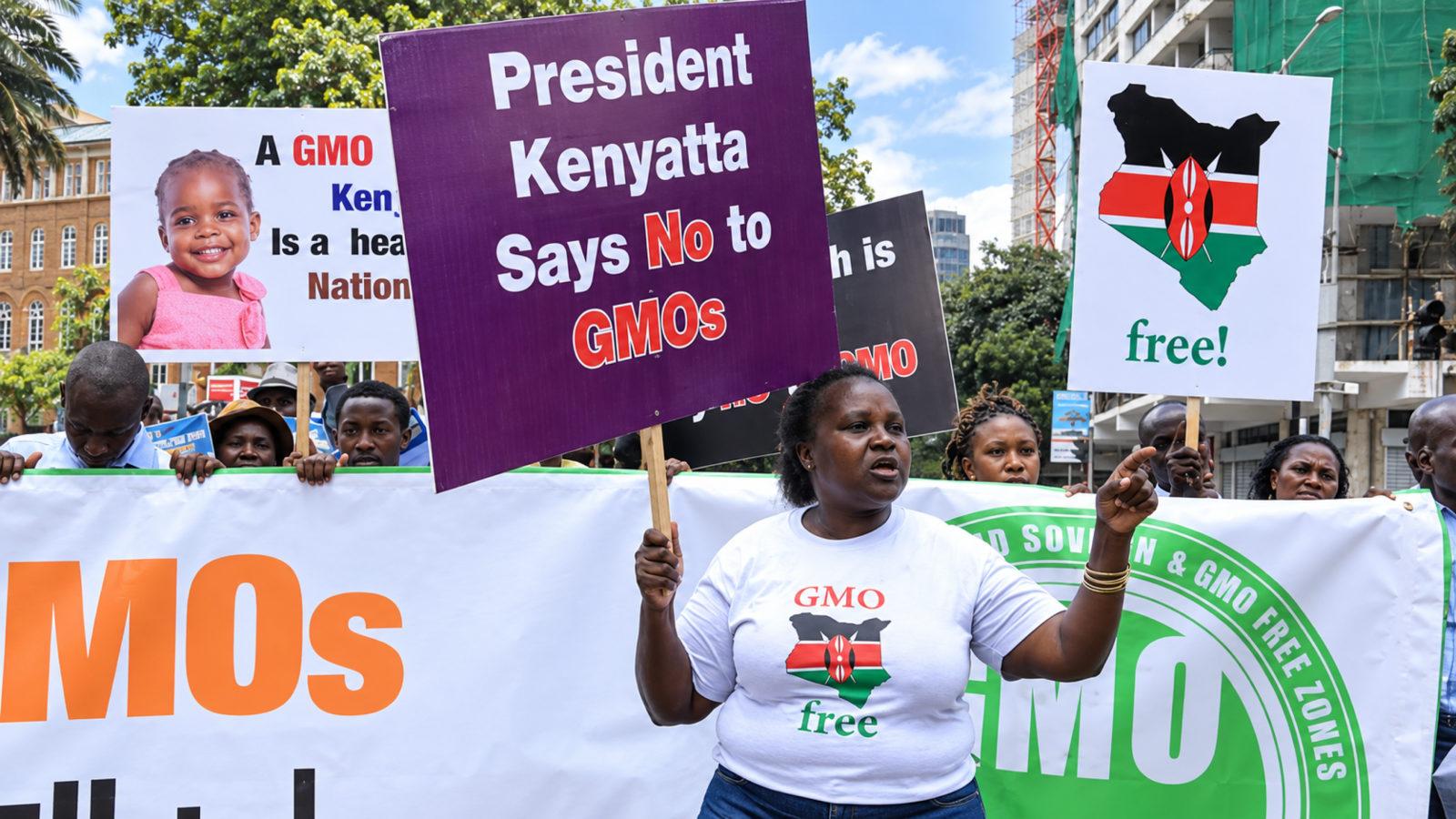
Across East Africa, genetically modified crops have run into very different obstacles. Uganda has scientists developing modified crops but has struggled for years to establish a legal framework for their release. Tanzania stopped and destroyed authorised field trials, citing regulatory and genetic-resource concerns. Kenya lifted its long-standing GMO ban, approved crops including Bt maize, and then found their rollout entangled in court proceedings. Ethiopia moved ahead with genetically engineered maize in 2025.
The striking feature of these cases is how rarely the final decision has rested on a new scientific finding. Presidents, ministries, regulators, parliaments and courts have shaped what happens to the technology. The result is a region where neighbouring countries can work on the same crops and the same diseases while giving researchers very different legal routes to the farm.
Uganda’s missing signature
In December 2017, Uganda’s President Yoweri Museveni returned a biotechnology and biosafety bill to Parliament without signing it. Parliament had passed the legislation after years of debate, and the bill was intended to create a framework for research, contained trials and the eventual release of genetically modified organisms.
Museveni’s objections were unusual. In his letter of 21 December to Speaker Rebecca Kadaga, he questioned provisions dealing with patent rights and the communities that had developed Uganda’s indigenous crops and livestock over generations. He also called for safeguards to prevent genetically engineered material from being mixed indiscriminately with indigenous material.
That distinction matters. Museveni cannot fairly be described simply as an opponent of biotechnology. His letter acknowledged potential uses for genetic engineering, including drought resistance and disease resistance, while arguing that the law needed stronger protections for indigenous genetic resources.
Parliament reconsidered the legislation and passed it again in November 2018 as the Genetic Engineering Regulatory Bill. The president again declined to assent. Parliament’s own bill tracker records the original passage on 4 October 2017 and the reconsidered version on 28 November 2018.
The consequences for Ugandan agricultural research have been significant. The country’s scientists have developed genetically engineered crops aimed at problems including bacterial wilt in bananas and viral disease in cassava. That research can continue inside a laboratory or a confined trial, but commercial release remains out of reach without the appropriate regulatory route.
It is an unusual position. Uganda has invested in the scientific capacity to develop technologies for local agricultural problems, while the political and legal process needed to take some of those technologies further remains unresolved.
Two maize technologies, one project
The East African maize story is easy to misunderstand, because two very different products emerged from related research.
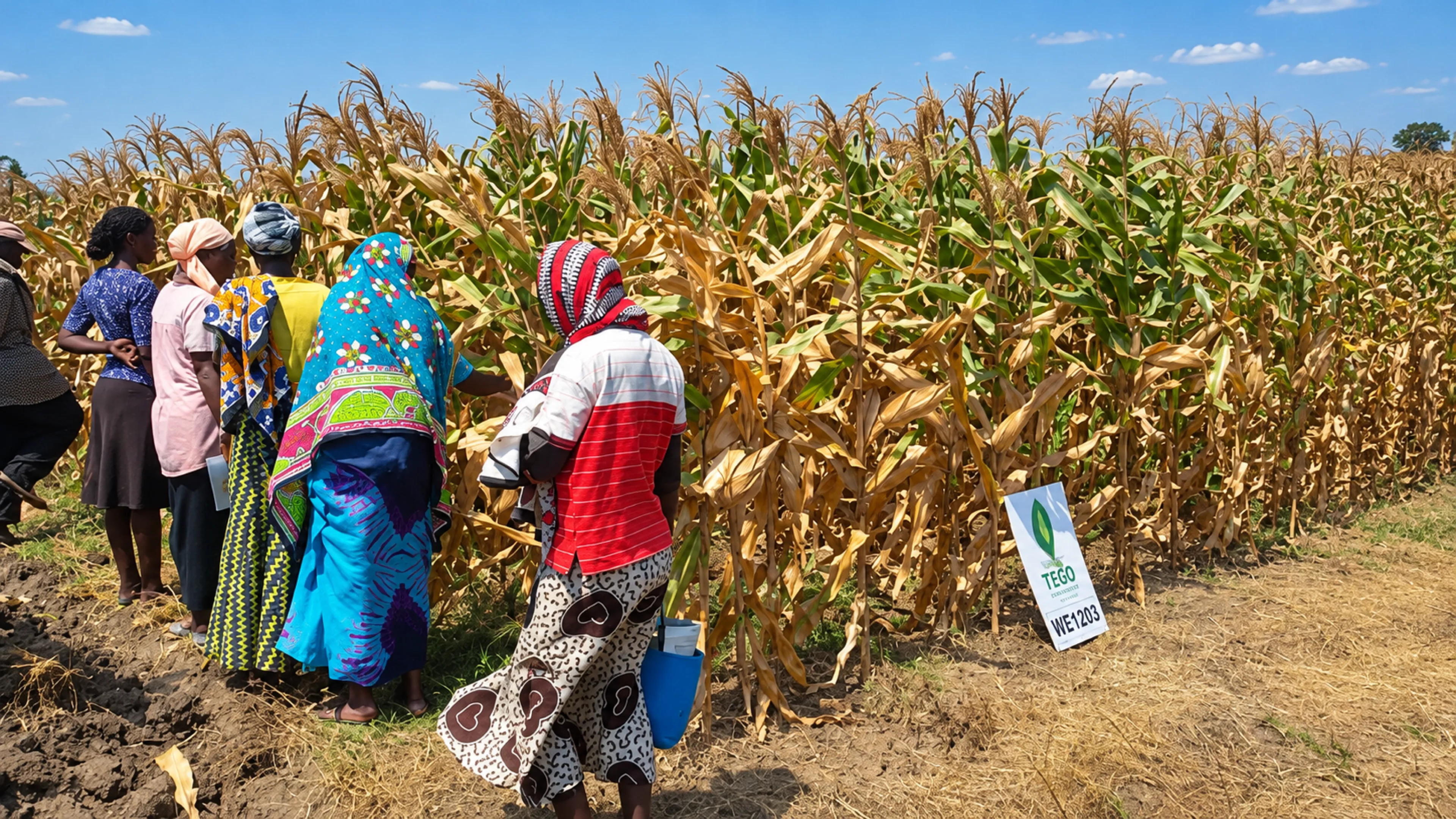
The Water Efficient Maize for Africa programme, known as WEMA, used conventional breeding, molecular breeding and biotechnology. Its conventional hybrids were released under the DroughtTEGO name. They contain no inserted transgenic material.
TELA came later. It builds on WEMA research and uses transgenic technology for insect protection and drought-related traits. TELA therefore requires biosafety approval before commercial cultivation.
The distinction is important because the same regional programme produced both conventional and genetically engineered products. A country can adopt DroughtTEGO hybrids while holding a completely different position on TELA.
That is exactly what makes East Africa’s regulatory story more complicated than a simple question of whether a country “uses GMO technology”.
Tanzania chose a different path
Tanzania has had biosafety regulations since 2009. Its approach placed substantial liability on those involved in biotechnology, creating a high level of legal risk around any potential damage.
Even so, the government authorised confined field trials of genetically modified drought-tolerant maize at Makutupora in Dodoma in 2016. GM cassava trials were also conducted at Mikocheni in Dar es Salaam.
Then, in November 2018, the Ministry of Agriculture ordered the trials stopped and instructed researchers to destroy the remaining trial material. The Citizen reported that the Makutupora maize trial was already at an advanced stage and that the cassava trial was still under way.
The government’s stated concern centred on the handling and release of trial information without the required authorisation. A research official later described the episode as a misunderstanding and said the government supported the research. Policy since then has pointed the other way.
In January 2021, Agriculture Minister Adolf Mkenda cancelled GMO research trials again, and Tanzania has since stepped up scrutiny of imported genetically modified seed. The stated rationale is the protection of Tanzania’s genetic resources and local seed.
Tanzania’s position offers an important counterexample in the regional debate. The country has kept producing large quantities of maize from conventional varieties and agricultural inputs. Its Ministry of Agriculture reported that maize production reached 12.26 million tonnes in 2023/24, making Tanzania Africa’s second-largest maize producer that year.
Those figures do not establish that conventional agriculture is superior to biotechnology. They establish something narrower and more useful: Tanzania’s maize sector has expanded without commercial GM maize.
Kenya lifted the ban, then met the courts
Kenya’s history followed almost the reverse path.
The country banned GM food imports in 2012, amid controversy over a French study that linked genetically modified maize to tumours in rats. That study was later retracted, yet the Kenyan ban stayed in place for another decade.
In October 2022, the government lifted the ban. Litigation followed, and the courts became another institution able to determine how far the policy could go.
Kenya already had experience with commercial biotechnology. Bt cotton was approved for cultivation in 2020, and by early 2026 the National Biosafety Authority said roughly 10,000 acres were under Bt cotton in several regions of the country.
Maize has proved far more contentious, because it is a major staple.
Kenya’s National Biosafety Authority and research institutions spent years developing and testing Bt maize. National performance trials were completed, and three insect-resistant varieties were approved for release. In January 2025, government material described the varieties as approved for commercialisation, pending seed multiplication and deployment.
Court proceedings continued alongside that process. In March 2025, the High Court in Kisumu issued an interim order restricting approvals relating to the transfer, handling and use of GMO maize. By June 2026, final arguments had been heard in a case challenging the approval, cultivation and commercialisation of Bt maize.
Those proceedings show why a court order should not automatically be read as a scientific ruling on whether a crop is safe. An interim or conservatory order is designed to hold the position while the legal questions are considered.
Kenya’s maize story therefore involves several different decisions: the lifting of a national ban, regulatory assessments, public participation, approval processes and continuing litigation.
The cassava sitting across the border
Perhaps the clearest example of how regulation shapes agricultural technology is cassava.
Cassava brown streak disease can leave the leaves of a plant looking healthy while destroying the edible roots beneath the soil. Under severe infection, losses of usable roots can approach 100 percent. Researchers developed a genetically engineered cassava known as event 4046 to resist the disease.
The work was carried out through the VIRCA Plus collaboration between Kenya’s KALRO, Uganda’s National Crops Resources Research Institute and the Donald Danforth Plant Science Center.
Kenya’s National Biosafety Authority approved the environmental release of event 4046 in June 2021, allowing the crop to proceed to national performance trials. The assessment covered food, feed and environmental considerations.
By January 2026, Kenya had completed the national performance trials and the cassava was awaiting commercialisation.
The contrast with Uganda is striking. Scientists from the two countries worked on the same disease in the same research programme. Kenya has a regulator that can receive and assess an application. Uganda’s problem has been more fundamental: without an operative biosafety law, its researchers have no equivalent route to commercial release.
The border, in other words, changes what happens to the same scientific work.
Ethiopia moved ahead
Ethiopia offers another model.
The country approved genetically engineered cotton in 2019. Then, on 18 February 2025, its National Variety Release Committee approved three TELA maize hybrids. Two were intended for lowland areas with limited moisture, and the third for mid-altitude conditions. The maize became Ethiopia’s first commercially available genetically engineered food crop.
The yield claims surrounding the launch deserve some caution. Project officials reported gains of up to 60 percent over conventional varieties. USDA reporting records that figure as a project claim, not as an outcome independently established from long-term farmer adoption.
The important point is institutional. Ethiopia moved from approval to commercial launch without the presidential refusal, destroyed field trials or prolonged court intervention seen elsewhere in the region.
Who gets to decide?
The regional picture is therefore hard to reduce to a single East African position.
Uganda’s dispute has centred on legislation, patents, indigenous genetic resources and the authority to regulate genetic engineering. Tanzania has repeatedly put its regulatory system and the protection of genetic resources first, while continuing to expand conventional maize production. Kenya has built a formal biosafety system and allowed some GM crops to be commercialised, while the courts continue to examine challenges to others. Ethiopia has moved more quickly towards commercial biotech maize.
The scientific question remains important in every case. So do yield performance, disease resistance, environmental effects, food safety, farm economics and access to seed. Yet the final decision often rests with institutions that operate outside the laboratory.
A useful example comes from South Africa. In 2019, the government upheld the rejection of a stacked maize application involving drought tolerance, after the appeal process concluded that the drought-tolerance trait had not shown yield protection under water-limited conditions.
That decision is a reminder that regulatory scepticism can rest on evidence about whether a trait actually delivers the benefit claimed for it. Sometimes the question is simply whether a technology works well enough in the conditions where it is meant to work.
The questions still unanswered
East Africa’s GMO debate has produced plenty of decisions and fewer definitive answers about outcomes.
Uganda’s disease-resistant crops have not been tested at commercial scale, so their real-world performance remains uncertain. Tanzania’s growth shows that substantial maize production is possible without GM varieties, although that fact alone cannot show which system would perform better under the same conditions.
Kenya’s Bt maize is moving through a regulatory and legal process whose final outcome remains contested. Its virus-resistant cassava has reached the end of national performance trials, bringing it closer to farmers. Ethiopia has begun the commercial phase of TELA maize and will eventually provide evidence from real farmer use.
What these countries share is a set of agricultural problems: drought, insects, plant disease, pressure on food production and fragile seed systems. What they do not share is a single answer to how biotechnology should be governed.
That may be the most important fact about the region.
The same scientists can work across borders. The same disease can cross them. The same maize programme can produce both conventional and genetically engineered seed. Yet the decision about whether a crop reaches a farmer still belongs to national institutions.
In East Africa, the technology may begin in a laboratory. Its future is decided somewhere else.







Comments
No comments yet. Be the first to share your thoughts.