

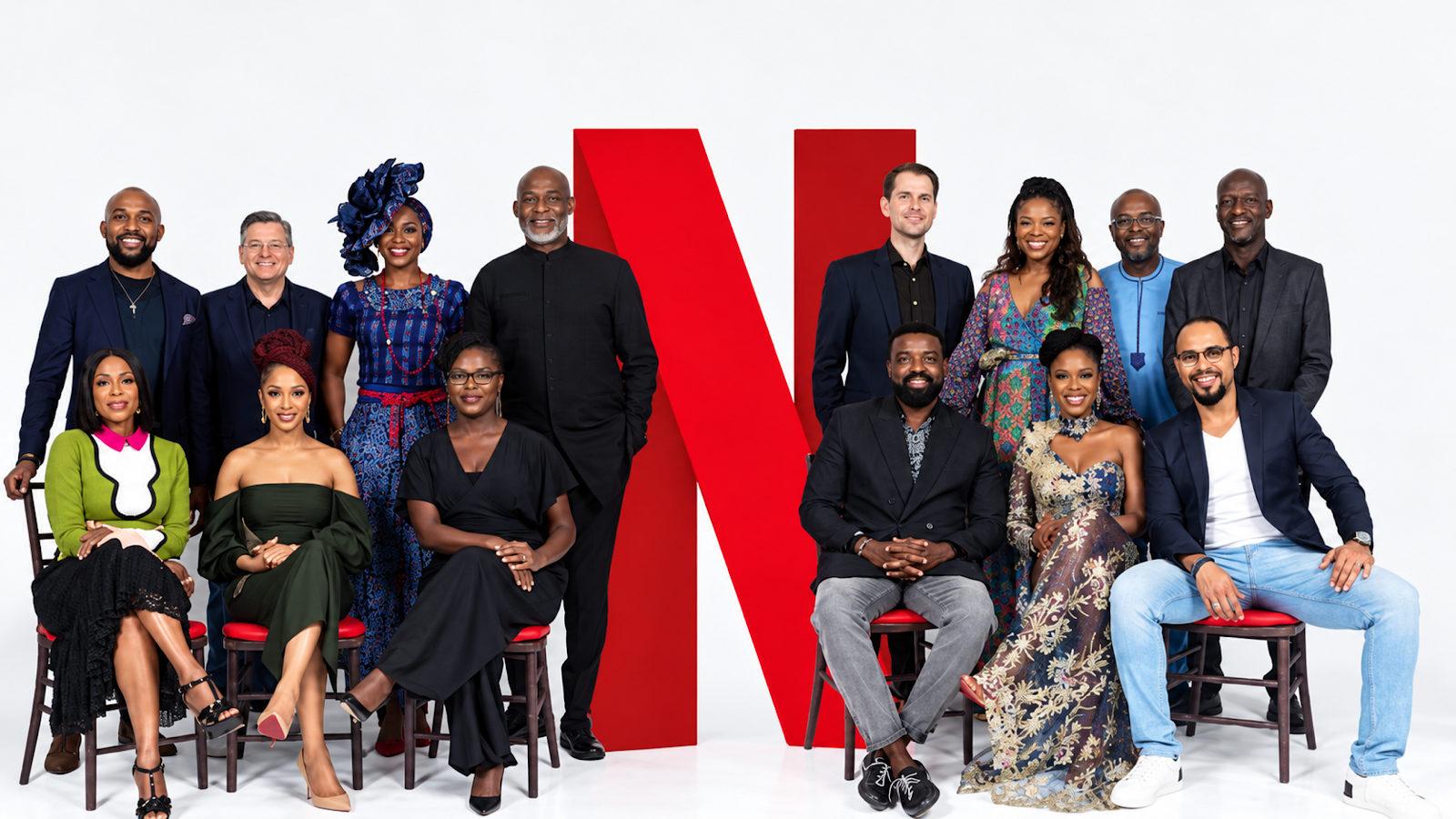
Lagos, the first week of November 2024. Netflix throws a lavish industry party called "Lights, Camera... Naija," filling a venue with Nollywood's biggest stars, its top producers and its own streaming executives. Days later the mood inside several production offices flips. Filmmakers with scripts moving through Netflix's pipeline start hearing that their projects are on hold or shelved.
Rumour fills the gap almost at once. By the time entertainment blogs and industry WhatsApp groups have passed the story along, it has hardened into a headline: Netflix is abandoning Nigeria. Netflix issues a denial. Kunle Afolayan, the veteran director whose remarks were widely blamed for the rumour, says he never claimed an exit, only that the company was cutting its exposure to the market. What Netflix was actually doing turns out to be less dramatic than an exit and more instructive: quietly resetting a strategy built for a Nigeria whose currency no longer exists in the form it did when that strategy was written.
Under the confusion sits a bigger question than whether a California streaming company stayed loyal to a West African film industry. For nearly a decade, Netflix's spending worked as an informal scoreboard for Nollywood's health: every expansion read as validation, every pullback as rejection. That scoreboard was never an honest one. Nigeria's film industry had already shown, long before any streaming platform arrived, that it could build a global audience on almost no money at all.
The industry that speed built
Nollywood's origin has nothing to do with studios, government grants or foreign investors. It starts with a trader named Kenneth Nnebue, who ran a business in Onitsha and found himself with a large stock of unsold blank VHS cassettes. In the early 1990s, money from the state broadcaster had all but stopped reaching the country's actors, writers and crews. Nnebue's fix for his inventory doubled as a lifeline for the industry: put something on those tapes and sell it directly.
What he produced was Living in Bondage (1992), the story of a man who trades his wife's life for wealth, a plot that landed hard in a country wrestling with corruption and suspicion of anyone who got rich too fast. It was shot quickly on a camcorder, with no cinema release and no distributor, and sold on the street in huge numbers. That film, born of a warehouse of unsold tapes, is widely credited as the start of Nollywood.
The circumstances of that birth shaped everything that followed. Speed and cost, not polish, became the measures that mattered, because the business depended on reaching buyers before piracy wiped out the profit. By 2009 Nollywood had passed every film industry in the world except Bollywood in sheer output. When Nigeria rebased its economy in 2014, statisticians valued the industry at 853.9 billion naira, about $5.1 billion at the time.
None of that volume turned automatically into craft. Productions often wrapped in under two weeks on budgets counted in the tens of thousands of dollars, a constraint driven by financing, not skill. Lighting, sound mixing and visual effects were cut first, every time, because the system rewarded whoever shipped a finished film fastest. That history is the real answer whenever someone asks why so many Nollywood films still look unfinished. The problem was never a shortage of talented people. It was a financing structure that punished anyone who tried to slow down and do the work properly.
The Netflix promise
Netflix launched in Nigeria in 2016 and offered, on paper, an escape from that speed-driven model: bigger budgets, longer shoots and a direct line to viewers far beyond anything the video-shop system could deliver.
Its first Nigerian original, acquired in 2018, was Lionheart, written by, directed by and starring Genevieve Nnaji. Unlike most Nollywood productions of its time, it had the time and resources to be made carefully. In 2019 Nigeria put it forward as the country's first entry for the Academy Award for best international feature.
The Academy disqualified it for having too much English dialogue. About 11 minutes of the film are in Igbo; the rest is in English, the official language Nigeria inherited from British rule. Nnaji answered publicly that the film reflects how Nigerians actually speak and that English is the bridge between the country's more than 500 languages. The director Ava DuVernay asked whether the Academy meant to bar Nigeria from ever competing in its official language. A film able to represent Nigerian cinema on the world's biggest stage had been knocked out by rules written with no thought for Nigeria's colonial past.
That episode foreshadowed the dynamic that would define the whole relationship. International recognition came wrapped in international rules, and Nigeria had no hand in drafting them.
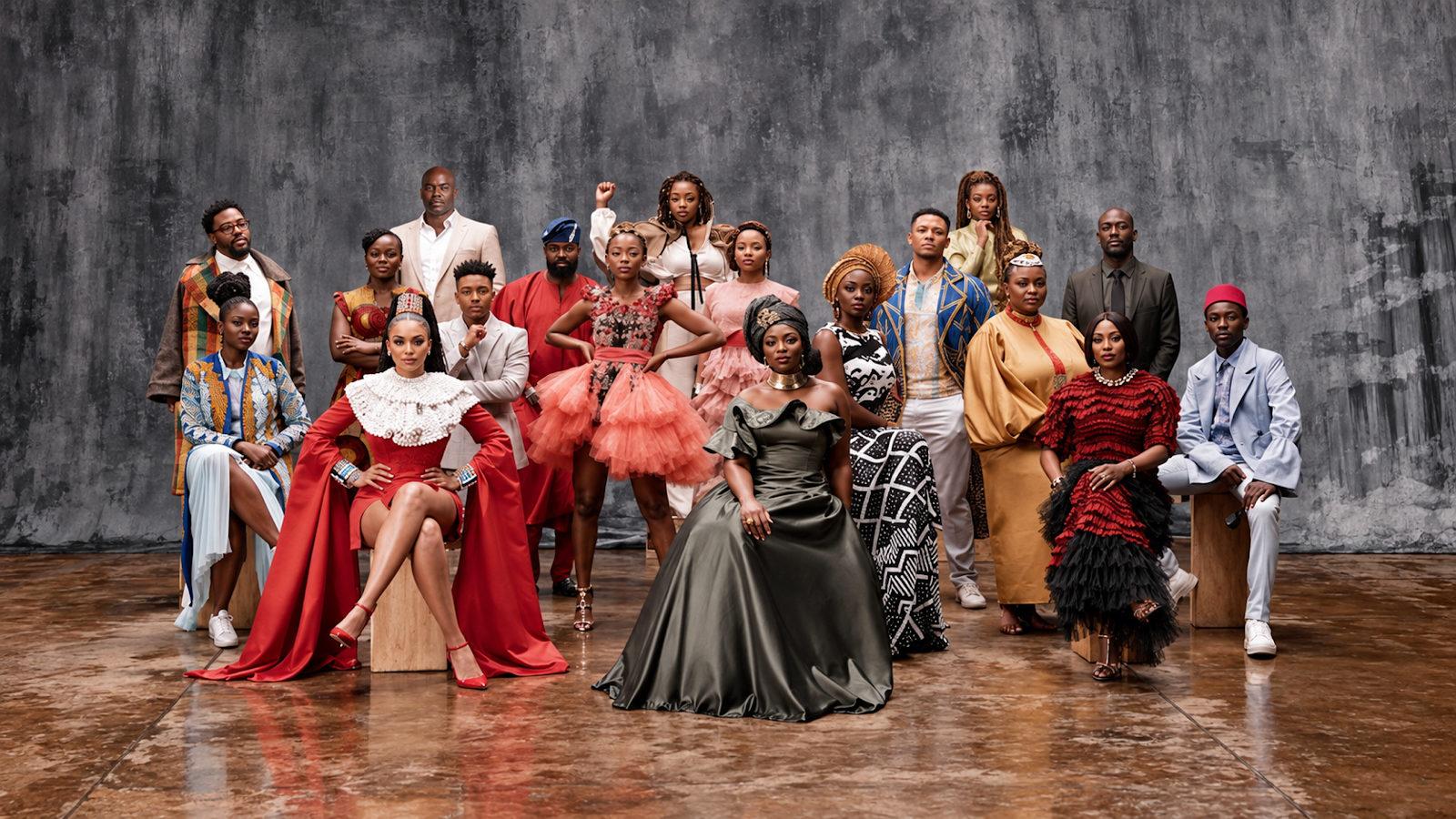
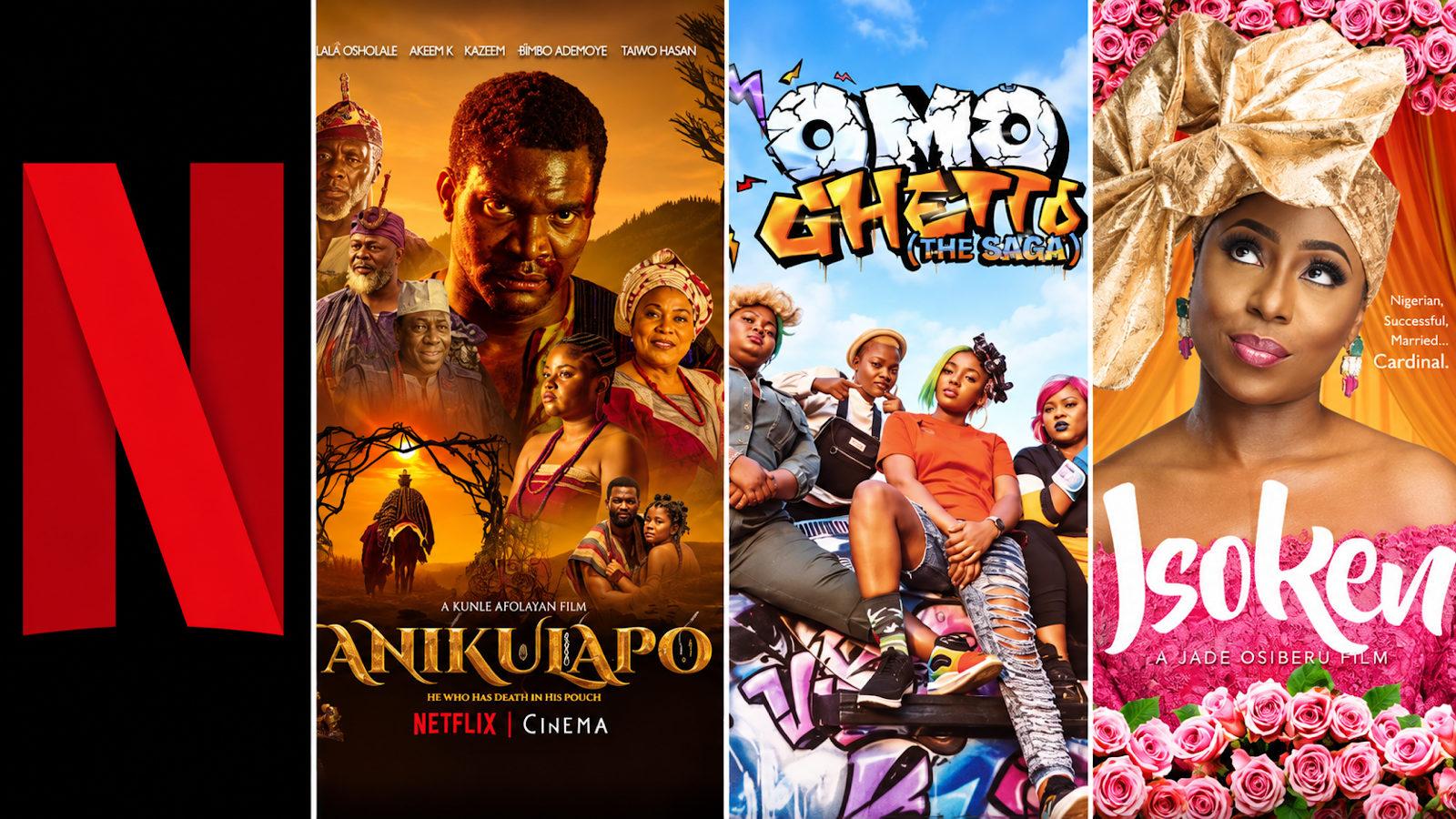
A Nollywood cast portrait. Netflix’s commissions brought longer shoots and bigger budgets.
Investment kept climbing for several more years. Between 2016 and 2022, Netflix says it put more than $23 million into Nigerian film, covering 283 licensed titles and a small slate of commissioned originals that included Anikulapo and Blood Sisters. By its own accounting, that spending supported more than 5,140 jobs. Those figures were not trivial to the people whose pay depended on them.
Set them, though, against what Netflix spent across Africa in the same period. Of the $175 million it invested in Nigeria, South Africa and Kenya combined, $125 million went to South Africa. Nigeria, with the continent's largest population and largest film output, took a far smaller share. That gap had nothing to do with the quality of Nigerian storytelling. It had a lot to do with a factor that never appears in a film review: the exchange rate.
Why the money stopped
In June 2023 Nigeria's central bank abandoned its managed exchange rate and let the naira float. The rate went from about 465 naira to the dollar at the start of that month to about 769 by its end, and within roughly eighteen months it had passed 1,500, one of the steepest currency falls anywhere in that period.
For a company like Netflix, that fall built a mismatch into the business. Nigerian subscribers pay in naira. Production costs, from equipment to crew, run in dollars or track the dollar closely. When the naira collapses, the dollar cost of making anything in Nigeria rises sharply while subscription income, converted back, shrinks. A budget that worked in 2022 could look reckless two years later, with nothing about the creative side having changed.
The subscriber base had never been large either. Nigeria has more than 220 million people, the most in Africa, yet industry estimates put Netflix's paying subscribers there at well under a million. That left Netflix trying to justify dollar-scale production in a small paying market just as the currency underneath it went into freefall.
The arithmetic is starker when licensing is set against commissioning. Buying the rights to a finished Nigerian film generally costs Netflix tens of thousands of dollars. Financing an original from scratch, priced in dollars against a falling naira, can run into the millions. With that gap, and subscribers not growing fast enough to justify the bigger bet, the decision largely made itself.
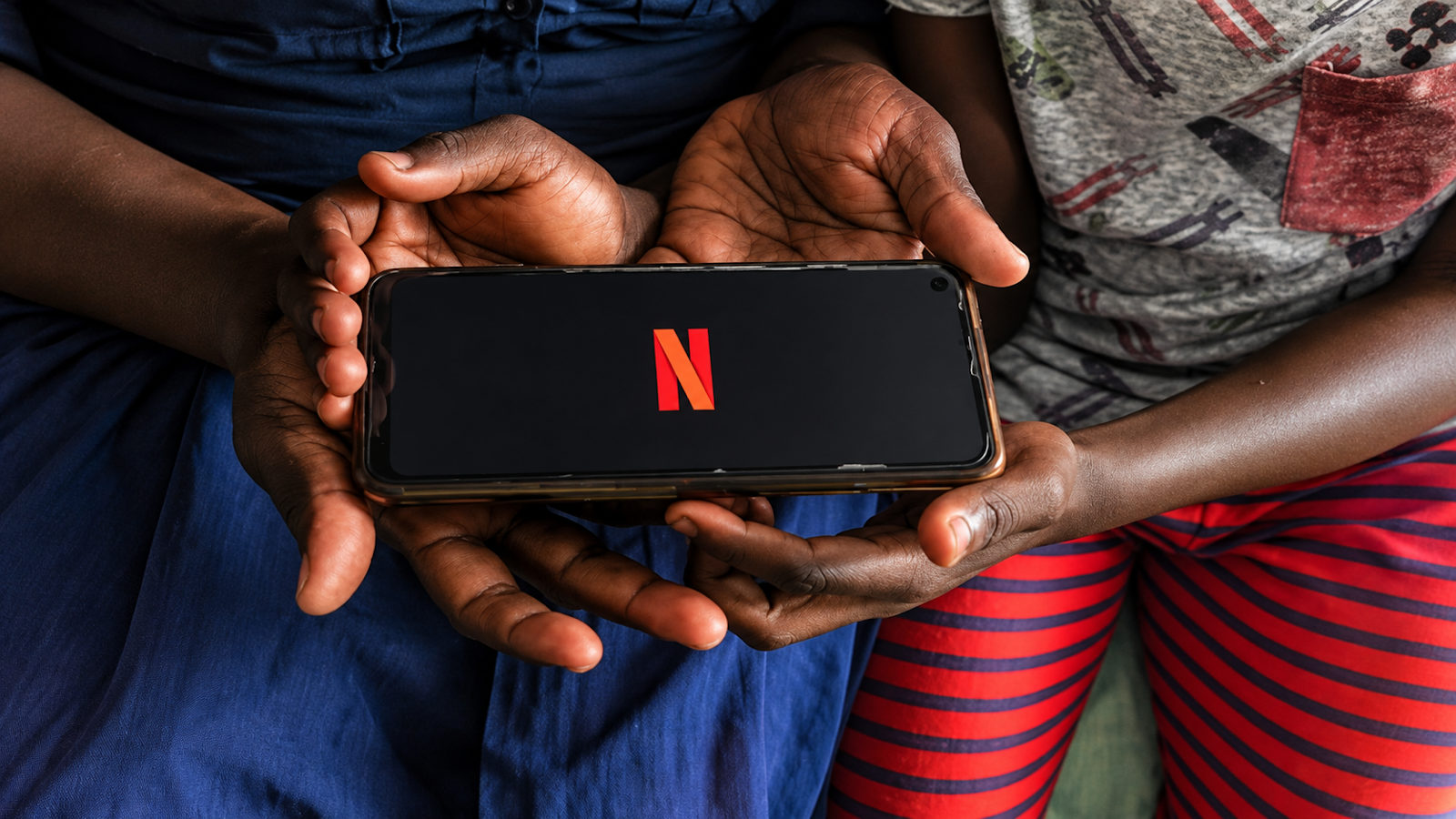
Jay Jituboh, director of The Origin: Madam Koi-Koi for the platform, laid it out in a widely shared interview: Netflix had not left Nigeria. It had stopped commissioning new originals and shifted to licensing films that had already found an audience in cinemas. Netflix's own statement said much the same: "We are not exiting Nigeria." The company said it would keep investing in Nigerian stories.
Netflix was not acting alone. Amazon Prime Video, its closest rival in Nigeria, had already stopped funding new African originals while staying in the market. What first looked like one company turning its back on Nigeria was two global platforms reaching the same conclusion under the same currency and subscriber pressures.
The human cost, and a different model
The impact reached well past spreadsheets. David Karanja, the Netflix executive behind African originals such as Anikulapo, Shanty Town and Country Queen, left the company in the same period. His farewell note still described African storytelling as close to a breakthrough, an outlook the company's spending did not match, at least in the short term.
For filmmakers with active projects, the pause was not abstract. Approved scripts sat shelved. Crews expecting their next job found none. Actors who had built careers around eight years of streaming money had to rethink their plans.
Out of that disruption, something closer to a sustainable model has started to form. Instead of building projects around a streaming deal, producers have moved toward releasing films in cinemas first, letting a title prove itself with a paying audience before any platform gets involved. Cinema first, streaming licence second, has become the steadiest arrangement Nollywood has with Netflix and Prime, even if it is smaller than the commissioning boom of 2018 to 2023. It lacks the glamour of that period. It is also closer to the instinct that built the industry: prove the audience wants it before spending real money to make it.
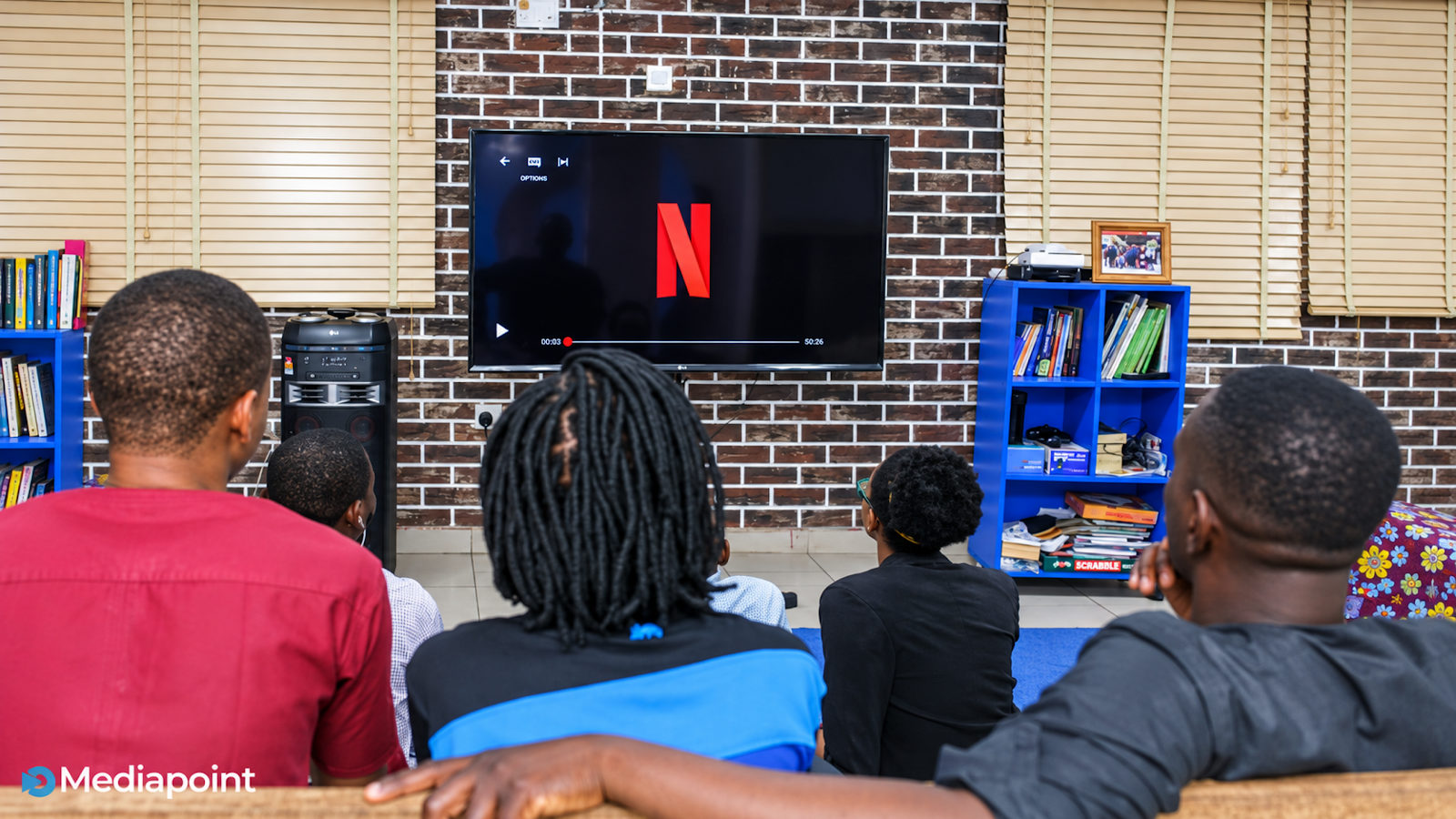
A family watches Netflix at home in Nigeria.
Two myths worth retiring
The first is that Netflix left Nigeria. It has not. What changed was a strategy built for a currency that no longer exists, and the company still licenses Nigerian films regularly, even without returning to the scale of its commissioning years.
The second is that low-budget production values point to a shortage of talent. They do not. Nigeria has filmmakers working at the same technical level, with the same equipment and at the same festivals, as their peers anywhere. What has been missing for most of the industry's history is a financing system built for patience instead of volume. A currency collapse that multiplies dollar costs does not create that patience. It destroys any attempt to build it.
Nor is Nigeria's experience unique. Netflix has met similar friction in India, where heavy investment collided with cheaper local streaming rivals and price-sensitive viewers. Lagos was not a story of one company walking away from one country. It was one visible case of a global business rebalancing currency risk across markets, following a financial logic that has almost nothing to do with how good the stories are.
A different way to measure success
The real question was never whether a streaming company would stay loyal to Nigeria. Companies do not run on loyalty. They run on subscriber numbers and currency risk, and few currencies have been harder to budget around in recent years than the naira. Treating one foreign platform's spending as a verdict on a whole national industry was always an unreliable measure, especially for an industry that made hits on tiny budgets long before Netflix signed its first Nigerian subscriber.
Nollywood's next chapter will not be written in a boardroom in Los Gatos. It will be decided by whether Nigerian producers can build financing that holds up under currency shocks: homegrown streaming services, cinema-first releases, co-productions with other African markets, investment from the diaspora, and a mindset that treats any single foreign partner as a bonus, not a foundation. Nollywood did not need Netflix to exist in 1992, when a trader in Onitsha turned a stockroom of unsold cassettes into the start of an industry. The version that emerges from the panic of 2024 may be the one that finally proves it never needed a single outside benefactor to keep going.



Comments
No comments yet. Be the first to share your thoughts.