


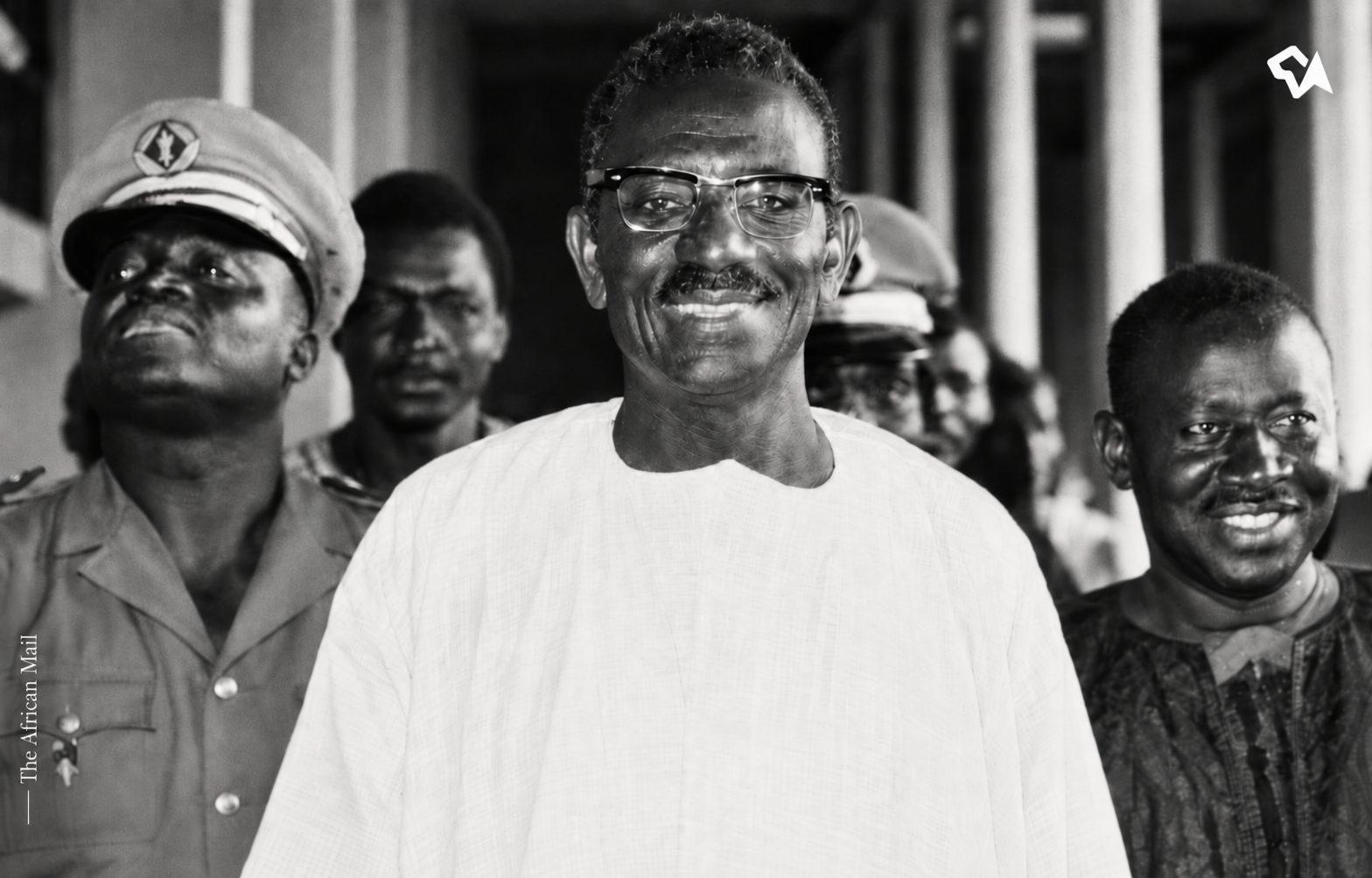
For most of the time Egyptology has existed as a discipline, ancient Egypt sat on the map of Africa and outside the story of it. Textbooks placed the pyramids beside Mesopotamia and Greece. The rest of the continent, if it appeared at all, got a separate chapter.
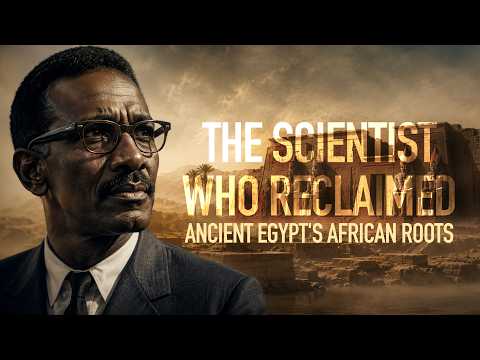
One scholar refused to accept that arrangement. Cheikh Anta Diop argued that ancient Egypt could only be understood as an African civilisation, and that cutting it off from the continent had been a choice rather than a finding.
The claim made him one of the most cited and most contested African intellectuals of the twentieth century. It also made him easy to caricature, by admirers and critics alike.
So what did Diop actually argue, what evidence did he use, and how much of it survives the research available today?
The physicist who took on Egyptology
Diop was born in December 1923 in the Diourbel region of Senegal, into a Wolof Muslim family. He studied first in a Quranic school, then in the French colonial system, and in 1946 he left for Paris.
What he did there explains his whole method. He took a philosophy degree at the University of Paris in 1948, then moved to the Faculty of Sciences to study chemistry, and worked in nuclear chemistry under Frédéric Joliot-Curie. Alongside the laboratory work he read Egyptology, linguistics and physical anthropology. He was politically active too, as secretary-general of the student wing of the Rassemblement Démocratique Africain and an organiser of the first Pan-African Student Congress in Paris in 1951.
That same year he submitted a doctoral thesis arguing that pharaonic Egypt was a Black African civilisation. It was rejected. Accounts of the jury’s reasons differ, variously citing excessive scope and insufficient supporting apparatus, and no archival record of its reasoning is widely available in English.
Diop published the work anyway, in 1954, as Nations nègres et culture. Outside the university it found a readership that inside the university it had not. Further submissions failed. In 1960 he finally defended a doctorat d’État before a jury of historians, sociologists, anthropologists and scientists, and was awarded the degree.
The popular retelling turns this into a single locked door. The record shows something slower: ten years of revision and resubmission, and an institution that did not accept his framework.
Back in Senegal he founded a radiocarbon dating laboratory at the University of Dakar and kept publishing until his death in 1986. The university now carries his name.
What Diop actually argued
“The ancient Egyptians were Black” is the sentence most people attach to Diop. It captures one strand of a much larger argument, and the strands do not stand or fall together.
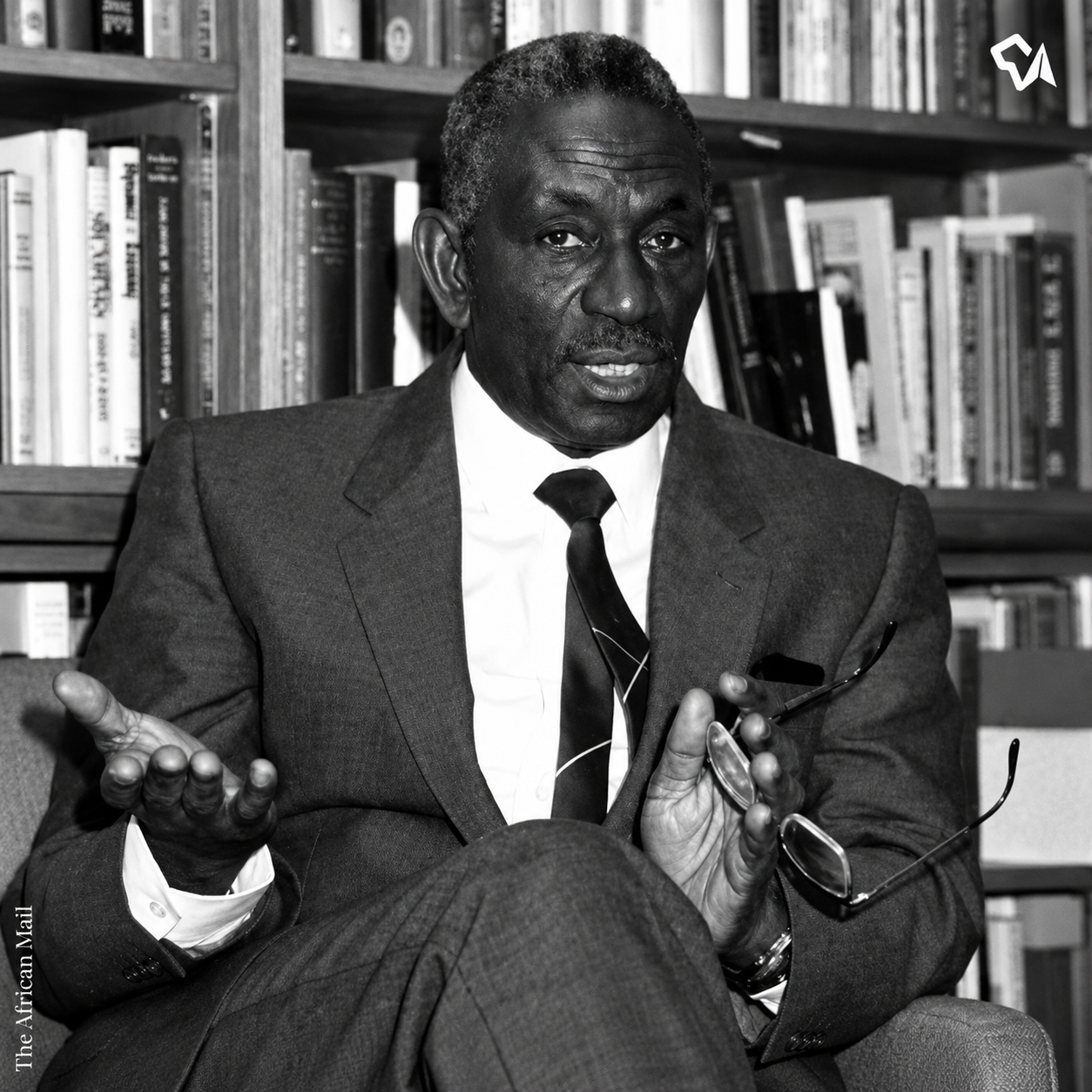
The first was about the discipline itself. Diop argued that Egyptology was built in nineteenth-century Europe, inside a culture that assumed Africans could not originate civilisation, and that this assumption became a starting premise instead of a hypothesis. Egypt’s achievements were therefore credited to migrants from Asia or Europe.
The second was cultural. In Nations nègres et culture and later in Antériorité des civilisations nègres, partly translated in 1974 as The African Origin of Civilization: Myth or Reality, he argued that the Nile Valley formed one cultural corridor, and that Egyptian religion, kingship, cosmology and social organisation showed continuities with societies further south and west.
The third concerned population. Diop held that the people of pharaonic Egypt, especially in its formative southern phase, were predominantly Black African, and that substantial admixture came later.
The fourth was linguistic. With the Congolese scholar Théophile Obenga, he argued that ancient Egyptian was genetically related to other African languages, using his own Wolof for systematic comparison.
The fifth, developed in The Cultural Unity of Black Africa, was a theory of African civilisation as a whole: a shared matrilineal, agrarian foundation that he set against the patrilineal, pastoral pattern he attributed to Eurasia.
He was open about his purpose. Diop believed a documented common past was a precondition for African unity, and said so in print. That candour is one reason critics asked whether his conclusions came before his evidence.
Why Egyptology pushed back
Two things are true at once here, and the debate goes wrong whenever one is dropped.
Colonial-era scholarship about Africa did carry racial assumptions. That is documented, not inferred. Nineteenth-century race science, the Hamitic hypothesis crediting African achievements to lighter-skinned incomers, and the intellectual defence of empire are all on the record. Diop did not invent the grievance.
But that does not mean every European Egyptologist was serving empire. Positions varied widely, and many specialists rejected Diop’s work on methodological grounds that had nothing to do with politics.
Those objections were serious. Critics said he applied modern racial categories to ancient people who did not use them, selected supporting evidence and passed over the rest, ran linguistic comparisons that ignored established method, and framed conclusions before the research was done.
Diop’s reply was that his opponents’ conclusions had been framed the same way, and that he was being held to a standard of proof they had never met.
So the real dispute was never whether colonial ideology shaped early Egyptology. It was whether Diop’s alternative met the discipline he was demanding of others. The answer decides whether his work reads as a correction inside scholarship or as a rival to it.
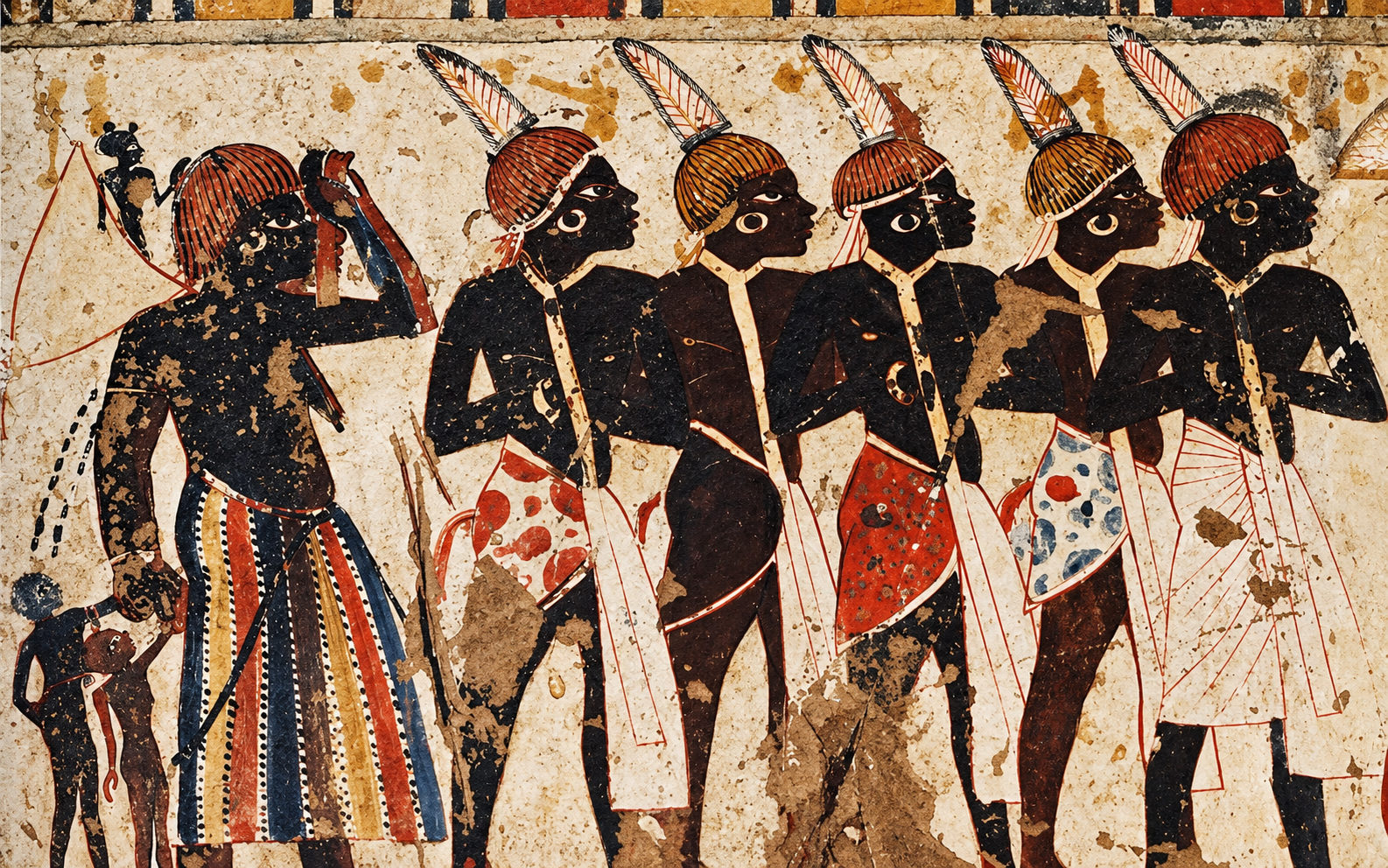
Five kinds of evidence, and how they held up
Diop’s method was deliberately interdisciplinary, on the view that no single field could settle the question.
Language. He compiled lists of Egyptian and Wolof words with similar forms and meanings and argued the pattern showed shared descent. Historical linguists have not accepted this. Ancient Egyptian belongs to the Afroasiatic family, itself African in origin, alongside Berber, Cushitic, Chadic, Omotic and Semitic. Wolof belongs to Niger-Congo. The comparison crosses a family boundary, and critics say the lists lack the regular sound correspondences comparative linguistics requires. Obenga’s later proposal of a wider “Negro-Egyptian” family has not been accepted either.
Bones. Diop used skeletal series and cranial measurements to argue that early Egyptians clustered with other African populations. Bioanthropology has since moved on, and now reads such measurements as reflecting geography, environment and gene flow rather than discrete races.
Skin. This is the most garbled part of his legacy. Diop reported melanin dosage tests on skin samples from mummies and presented the results in Cairo in 1974. The sample was tiny, the mummies’ provenance uncertain, and the work was never replicated at scale. Diop proposed and attempted melanin testing. Melanin testing did not settle anything.
Ancient writers. Herodotus and other Greek and Roman authors described Egyptians in terms modern readers translate as dark-skinned. The passages are real. Their value is limited: ancient writers were not using modern racial categories, their observations were comparative and impressionistic, and Herodotus often repeated what he was told.
Culture. Diop paired Egyptian kingship, ritual, cosmology and social structure with practices recorded elsewhere in Africa. Critics answered that similarity is not descent, that comparable features appear in unconnected societies, and that many of his pairings are separated by thousands of years and kilometres.
Cairo, 1974: the debate goes global
In early 1974 UNESCO brought the argument into the open. From 28 January to 3 February, as part of preparing its General History of Africa, it convened a symposium in Cairo on the peopling of ancient Egypt and the decipherment of the Meroitic script. Around twenty specialists attended, from Egypt, Sudan, Senegal, Congo, France, Sweden, Germany, Finland, the United States and elsewhere.
Diop and Obenga were the only participants arguing for a Black African Egypt in that form.
The published proceedings tell a more interesting story than either popular version. The report noted that Diop and Obenga had prepared exceptionally detailed papers, and that some who came to oppose them found their positions harder to hold than expected. French participants including Jean Vercoutter and Serge Sauneron accepted that Egypt had to be understood in an African context rather than as an outpost of Asia. The meeting also recorded that much received knowledge about ancient Egypt rested on nineteenth-century assumptions that needed re-examining.
It did not endorse the Diop-Obenga thesis. The final report states plainly that no general agreement was reached, and several participants argued that race was the wrong category to be using at all.
Cairo is better understood as the moment the question became legitimate than as the moment it was answered.
What ancient DNA reveals
Genetics is where the picture has changed most since Diop’s death, and where it is easiest to overread.
Ancient DNA from Egypt is scarce. Heat, humidity, embalming chemicals and time all destroy it, which is why the field moved slowly.
In 2017 a team led by Verena Schuenemann published mitochondrial genomes from 90 individuals and genome-wide data from three, all buried at Abusir el-Meleq in Middle Egypt between roughly 1388 BCE and 426 CE. They shared more ancestry with Near Eastern populations than present-day Egyptians do, and the study found that sub-Saharan African ancestry in Egypt rose after the Roman period, with modern Egyptians carrying about eight percent more of it. The authors stressed the limits: one site, one community, and a window that opens long after Egypt’s formative millennia.
In July 2025 a team led by Adeline Morez Jacobs published in Nature the first whole genome from Egypt’s Old Kingdom. The man, buried at Nuwayrat about 265 kilometres south of Cairo, was radiocarbon dated to 2855 to 2570 BCE, roughly the era of the first pyramids. Most of his ancestry was best modelled as North African Neolithic, with around twenty percent traced to the eastern Fertile Crescent and Mesopotamia. The study detected no ancestry from central, eastern or southern Africa in this individual.
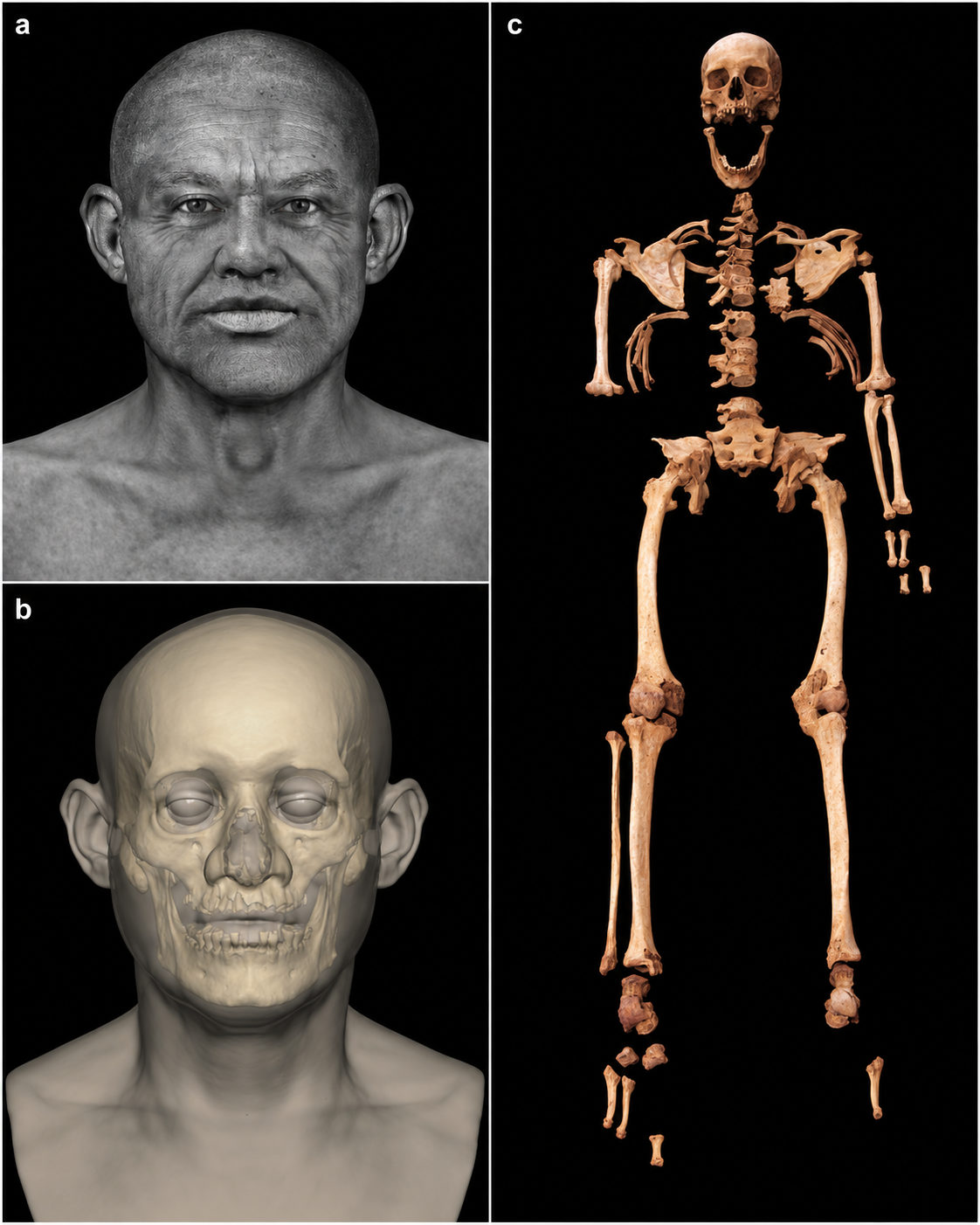
It is one genome. It cannot describe millions of people across three thousand years, and its authors were careful to say so.
Taken together, the evidence so far points to ancient Egyptian populations that were overwhelmingly indigenous to north-east Africa, with long-standing gene flow from West Asia and real regional variation along the Nile, including stronger African continuities in the south and towards Nubia.
What it does not deliver is either side’s simple answer. Genetics does not map onto the racial categories the debate was first fought in, and ancestry is a different question from cultural identity. The Egyptians themselves sorted people by language, dress and territory, not by the categories nineteenth-century Europe would later impose.
So, was Diop right?
His argument was never one proposition, so it cannot get one verdict.
Much of it now sits comfortably within mainstream scholarship: that ancient Egypt was geographically and culturally African; that it was in sustained exchange with Nubia and the wider Nile Valley for millennia; that African populations were central to Egyptian history throughout; and that nineteenth-century Egyptology carried racial assumptions that needed correcting. No serious Egyptologist today treats Egypt as separable from Africa.
Other parts are unsupported or still contested: the Wolof-Egyptian language link, the picture of a uniformly Black African population with admixture arriving only late, the melanin evidence as presented, and the theory of a single African civilisational matrix.
“Ancient Egypt was African” and “every specific claim Diop made has been proven” are different statements. Treating them as one does his work no favours.
Why the Diop debate still matters
Diop changed what could be asked. Before him, Egypt’s African context was rarely a research question in mainstream Egyptology. After Cairo, it was.
He changed institutions. His insistence that Africans should lead the study of African history shaped history departments across the continent and the UNESCO General History of Africa itself.
He also left a test that cuts both ways. The objections raised against him, that conclusions should not precede evidence and that similarity is not descent, apply to everyone. The strongest case for his legacy is that he demanded evidence-based scrutiny of received history, which is exactly the standard his own claims must meet.
And the online Diop has drifted far from the scholar. Claims circulate in his name that he never made and that his own methods would not support. Separating the man from the meme is part of taking him seriously.
What remains open is less whether Egypt was African than how history gets written: who sets the terms, whose assumptions pass as neutral, and what standard of proof a claim must meet depending on who is making it. Diop’s answers did not all survive. His question did.



Comments
No comments yet. Be the first to share your thoughts.