

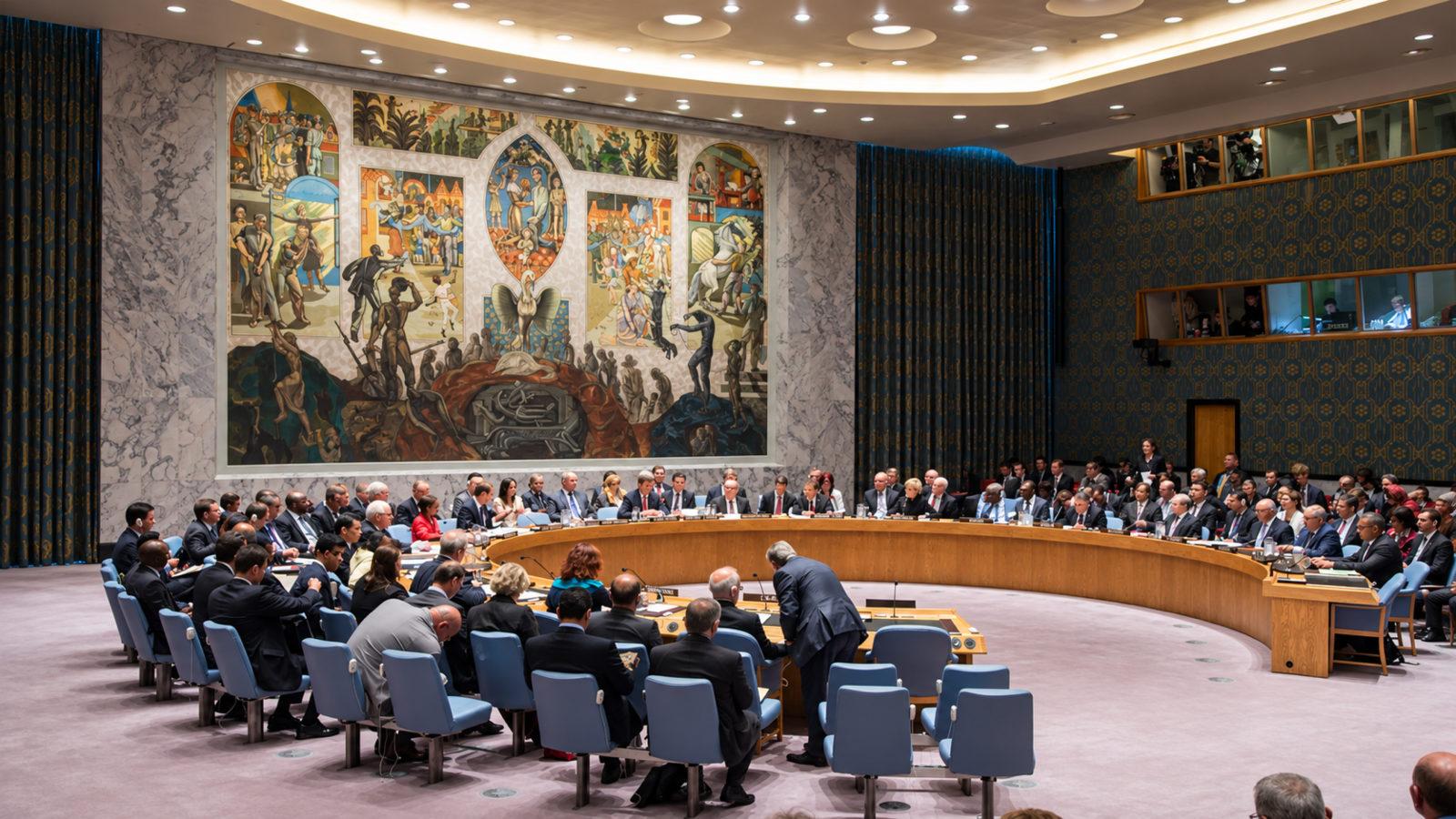
Five countries can stop the world’s most powerful security body from acting. Africa, with 54 UN member states, is not one of them.
On 23 September 2026, at the UN General Assembly in New York, Kenya’s president William Ruto said five nations hold a permanent power while the other 188 do not. “The equality proclaimed in this assembly ends at the doors of the Security Council,” he said. Ethiopia’s president, speaking during the same annual debate, asked how the world can justify denying 1.6 billion Africans equal representation.
The numbers explain the anger. The Council passed 44 resolutions in 2025, and Oxfam counts 20 of them as focused on Africa. Of the 24 passed under Chapter VII, the part of the UN Charter that allows sanctions and force, 18 concerned Africa. Yet when those texts are drafted and voted on, no African country holds a permanent seat.
Why not? And why does Africa keep asking for the veto too?
What is the question?
There are really two questions. Why does Africa have no permanent seat on the UN Security Council? And why does it have no veto?
The short answer: both were given to five countries in 1945, and they can be changed only with the consent of those same five. Every negotiation, alliance and rivalry since comes back to that rule. The longer answer starts with what Africa is asking for.
What happened?
The Council has 15 members. Five are permanent: China, France, Russia, the United Kingdom and the United States. Ten are elected for two-year terms, and Africa holds three of those seats in 2026. Permanent members never rotate off, and each can veto a resolution.
Africa’s demand took shape in 2005, when the African Union adopted the Ezulwini Consensus. It asks for at least two permanent African seats with the veto, plus five non-permanent seats. The AU, not the UN, would choose the countries.
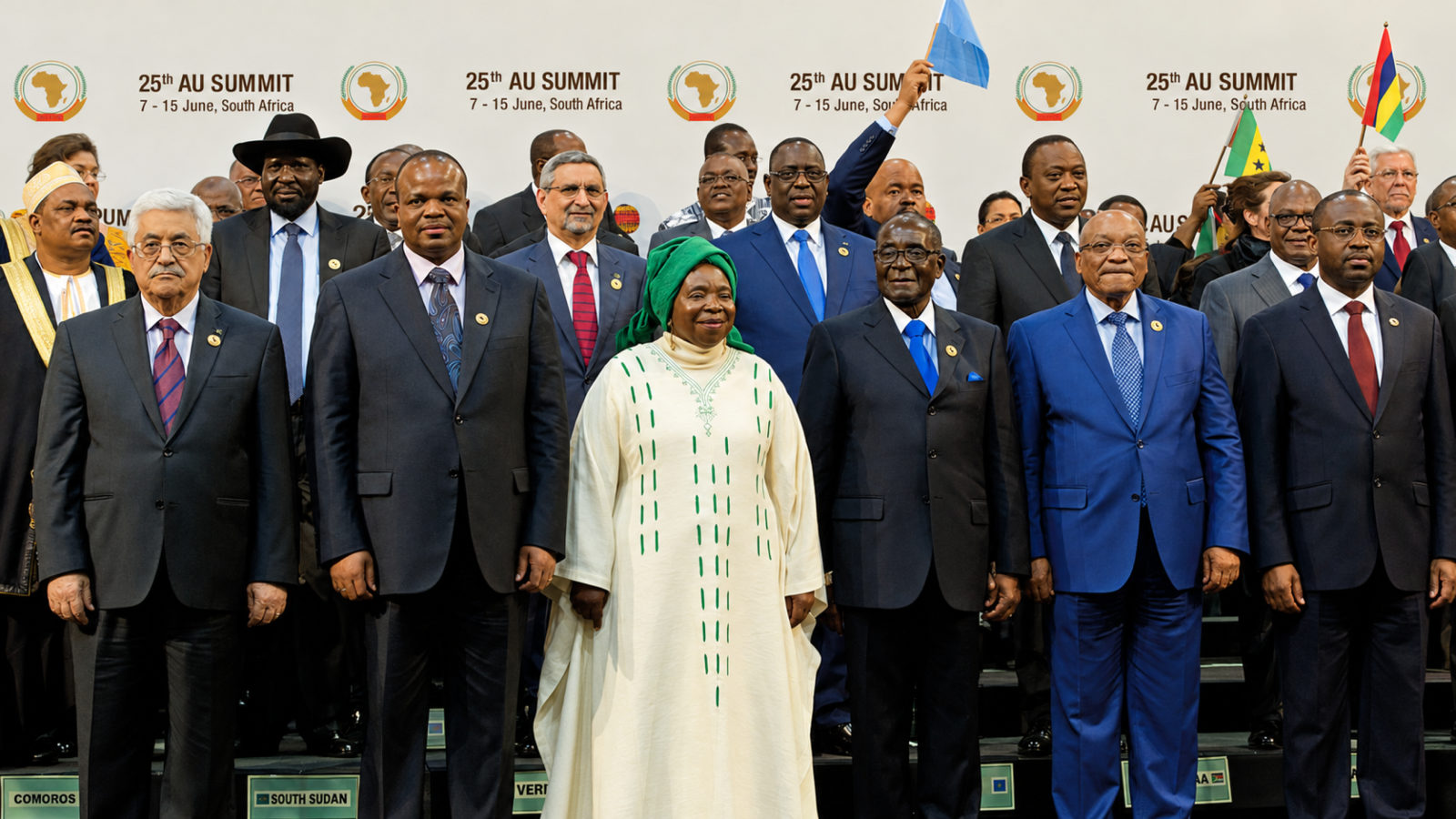
The General Assembly launched reform talks in 2008, and full negotiations began in February 2009. As of September 2026 they are in their 18th year. On 28 July 2026, member states rolled them into another session without a vote. There is still no negotiating text.
Why does it matter?
The stakes show in what the Council does. It can impose sanctions, authorise military force and send peacekeepers. As of May 2026, five of the 11 peacekeeping operations the UN lists are in Africa: Western Sahara, the Central African Republic, the DRC, Abyei and South Sudan.
The veto decides what reaches a vote. One “no” from a permanent member kills a substantive resolution, however many others support it. So decisions about sanctions or troops on African soil can hinge on five governments, none of them African.
Elected African members can speak and vote, but they cannot block. Nigeria’s former UN ambassador Ibrahim Gambari told Al Jazeera in September 2026 that the permanent members usually hold the pen, drafting the resolutions, which limits what elected members can start.
Historical context
Go back to 1945. The UN was built by the winners of the Second World War. The US, Britain and the Soviet Union agreed on a great-power veto at Yalta in February 1945. At the San Francisco conference, which ran from 25 April to 26 June 1945, the Big Five made clear there would be no United Nations without it.
Most of Africa was still under colonial rule. The UN began with 51 members, and the Council had 11 seats: five permanent and six elected.
Then came independence. On 23 August 1960 alone, the Council recommended eight African states for membership, among them Dahomey, Niger, Chad and Gabon. By June 1965 the UN had 114 members.
The Council grew only once. A General Assembly resolution adopted on 17 December 1963 raised it from 11 seats to 15, and it took effect on 31 August 1965. The five permanent members and their veto were left alone. That remains the last reform.
How does it work?
A Council decision needs nine votes. Before 31 August 1965 it needed seven. On anything substantive, the nine must include every permanent member, or a veto stops it.
Even an unopposed candidate for an elected seat needs two-thirds of the General Assembly, and a two-year term is short for building influence.
Now the catch. Article 108 of the Charter says amendments need two-thirds of the General Assembly and ratification by two-thirds of member states, including all five permanent members. If Africa wants a veto, the five countries that hold one must agree to share it. If Africa wants a seat, they must agree to make room.
What does the data show?
The Council adopted 44 resolutions in 2025, its lowest total since 1991, and only 61 percent passed unanimously. The UN’s own summary counts Chapter VII resolutions concerning Africa at 18 of 24.
The Middle East and Africa together made up nearly 75 percent of the Council’s country-specific meetings in 2025. Africa’s 54 states are about 28 percent of the UN’s 193 members.
Who is affected?
African governments feel it first. Their elected seats give a voice but no protection against a veto, so their influence depends on who else votes with them. The African Union carries the collective demand, and Russia’s ambassador has credited Sierra Leone with coordinating the AU’s Committee of Ten, the group that pushes it.
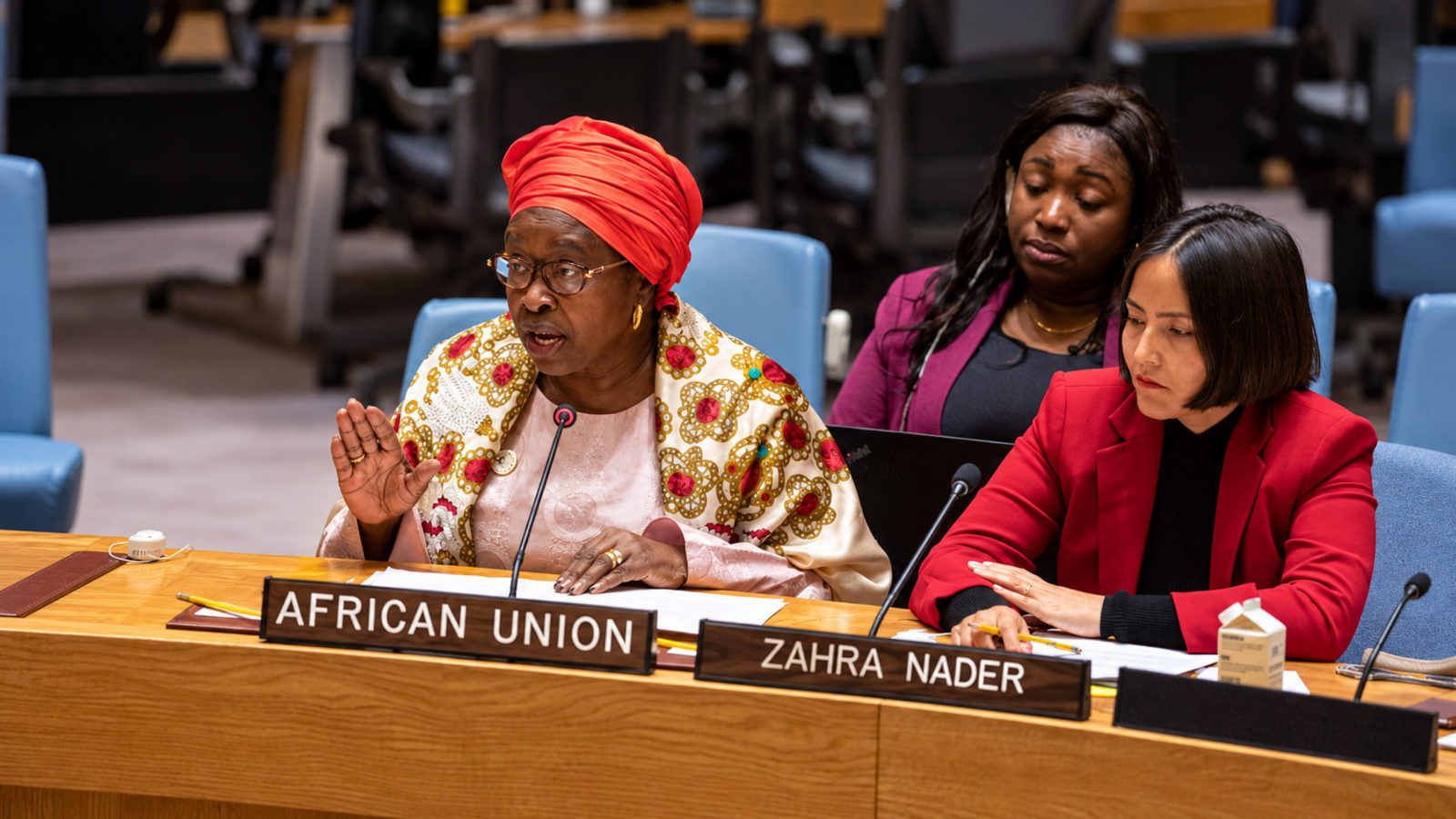
Civilians feel it later, because peacekeeping mandates and sanctions on African conflicts all begin in the Council.
What do experts say?
Gambari told Al Jazeera that the five permanent members are reluctant to give up a privilege they never had to win in an election. He calls the current arrangement an “anachronistic formula”.
Jakkie Cilliers of the Institute for Security Studies wrote in a 2026 analysis that the ratification rule makes progress hard to imagine, since each permanent member must agree.
South Africa’s president Cyril Ramaphosa said in October 2024 that some permanent members had accepted the case for two African seats, but that the veto question remained unclear. CSIS analyst Cameron Hudson said in September 2024 that African nations were puzzled by Washington’s offer of seats without veto power.
What are the competing explanations?
Ask who supports an African seat and you get a long list. Ask who will share the veto and the list goes quiet. Here is where the five stand.
United States. On 12 September 2024, under President Joe Biden, the US said it backs two permanent African seats. It also said it does not support expanding the veto, arguing that giving new members a veto would only deepen deadlock.
United Kingdom. In a November 2023 General Assembly statement, London called permanent African representation long overdue. It also backs permanent seats for Brazil, Germany, India and Japan, and a Council in the mid-20s. Its statements stress limiting the veto’s use rather than extending it, though the advocacy group CIVICUS reports that the UK and France propose vetoes for all new seats.
France. Paris backed Africa’s call for two permanent seats during the General Assembly’s November 2024 reform debate. It has also urged permanent members to give up the veto voluntarily when mass atrocities are at stake.
China. In November 2025 China’s UN ambassador Fu Cong said the historical injustice against Africa must be corrected and Africa given priority. But Beijing favours regional and rotating seats and opposes permanent terms won in a single vote. It also says Japan is unqualified for a seat.
Russia. On 20 April 2026 Moscow welcomed Africa’s reform model and said it supports more representation for Africa, Asia and Latin America. It says it cannot back a Council of 25 or more seats, and it has asked how Africa would choose its representatives.
Other players complicate the picture. The G4 (Brazil, Germany, India and Japan) want permanent seats for themselves as well as Africa. Uniting for Consensus, whose members include Italy and Pakistan, opposes new permanent seats and prefers longer-term elected seats. Each new permanent seat creates a rival. In September 2026 Russia’s foreign minister Sergey Lavrov backed India and Brazil but opposed Germany and Japan.
Africa has its own puzzle. Nigeria, Egypt and South Africa are the names most often mentioned, but the AU has not chosen who would take the seats.
Supporters say the Council loses legitimacy without Africa in its top tier. Sceptics warn a bigger Council could act more slowly.
What changed?
More governments now say Africa deserves a permanent seat. On 22 September 2024, UN members adopted the Pact for the Future, which promises to address the historical injustice against Africa. That month the US endorsed two African seats, and in November 2024 France and China voiced support for African representation.
On 20 April 2026 the African Group presented a formal reform model. Russia welcomed it, and Japan, speaking for the G4, called it a significant step.
What has remained?
The core has not moved. The same five countries hold the permanent seats and the veto. Article 108 still gives each of them a lock on change. And the talks run by consensus, so any determined group can stall them.
What does this mean today?
As of 29 September 2026, African leaders are pressing their case at the General Assembly session that opened on 22 September. The negotiations continue in the 81st session, with one camp wanting talks on a written draft and another wanting agreement on principles first.
Three questions remain open. Would new permanent members get a veto? Which African countries would hold the seats? And can a process that needs everyone’s agreement ever produce a text?
What should we understand from it?
Africa has no permanent seat and no veto because those powers belong to five countries by the Charter, and only those five can approve a change. The one time the Council expanded, from 1963 to 1965, the permanent five were left untouched.
There are reasonable arguments on both sides. Supporters see a correction of a colonial-era imbalance. Sceptics see a hard trade-off between fairness and effectiveness. What the record shows is narrower and clearer: African crises fill much of the Council’s agenda, and the continent still has no permanent voice in deciding them.

Comments
No comments yet. Be the first to share your thoughts.